Our Projects
Check out our latest projects and case studies.
EASTON PARK RIPRARIAN RESTORATION
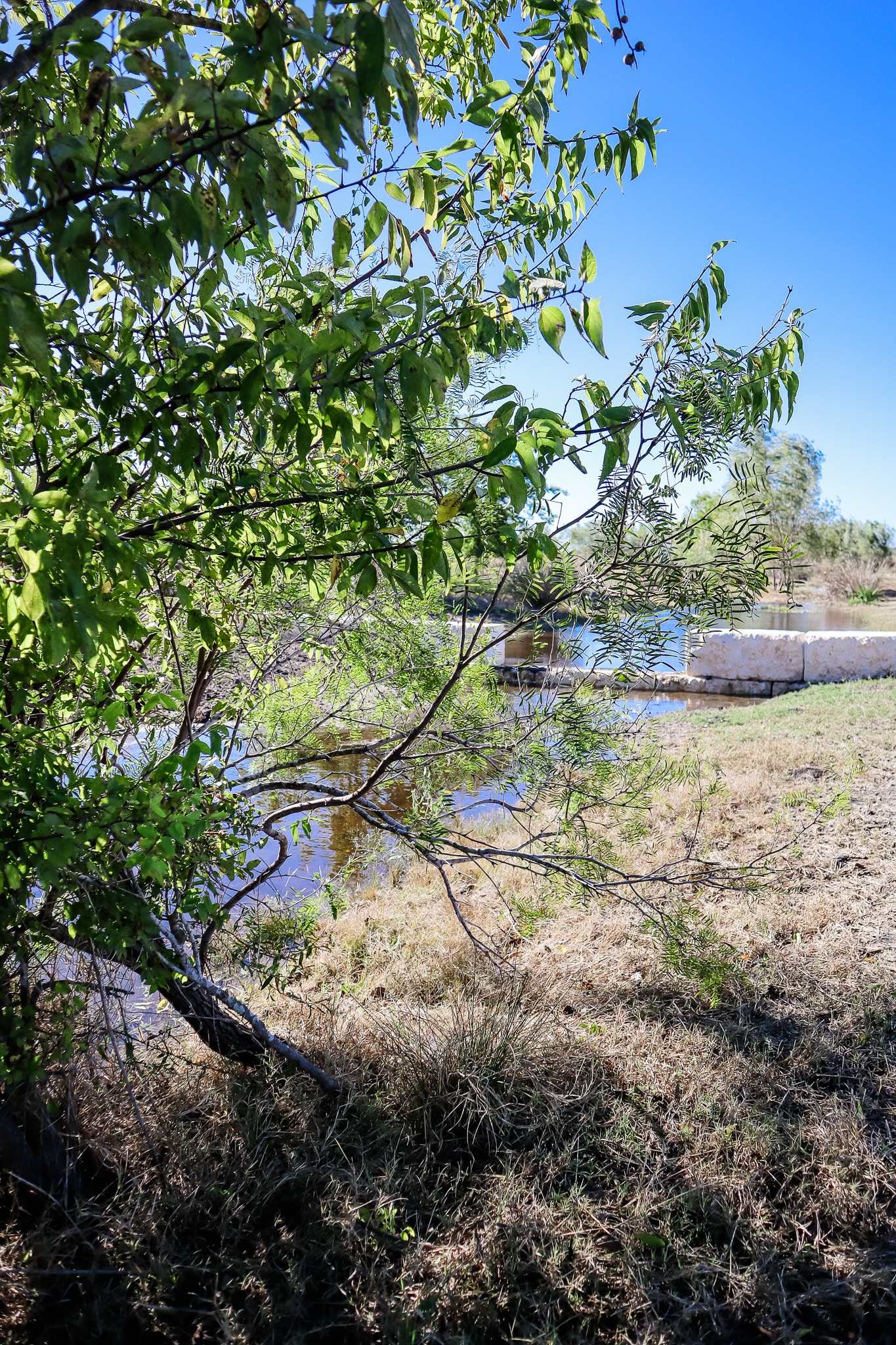
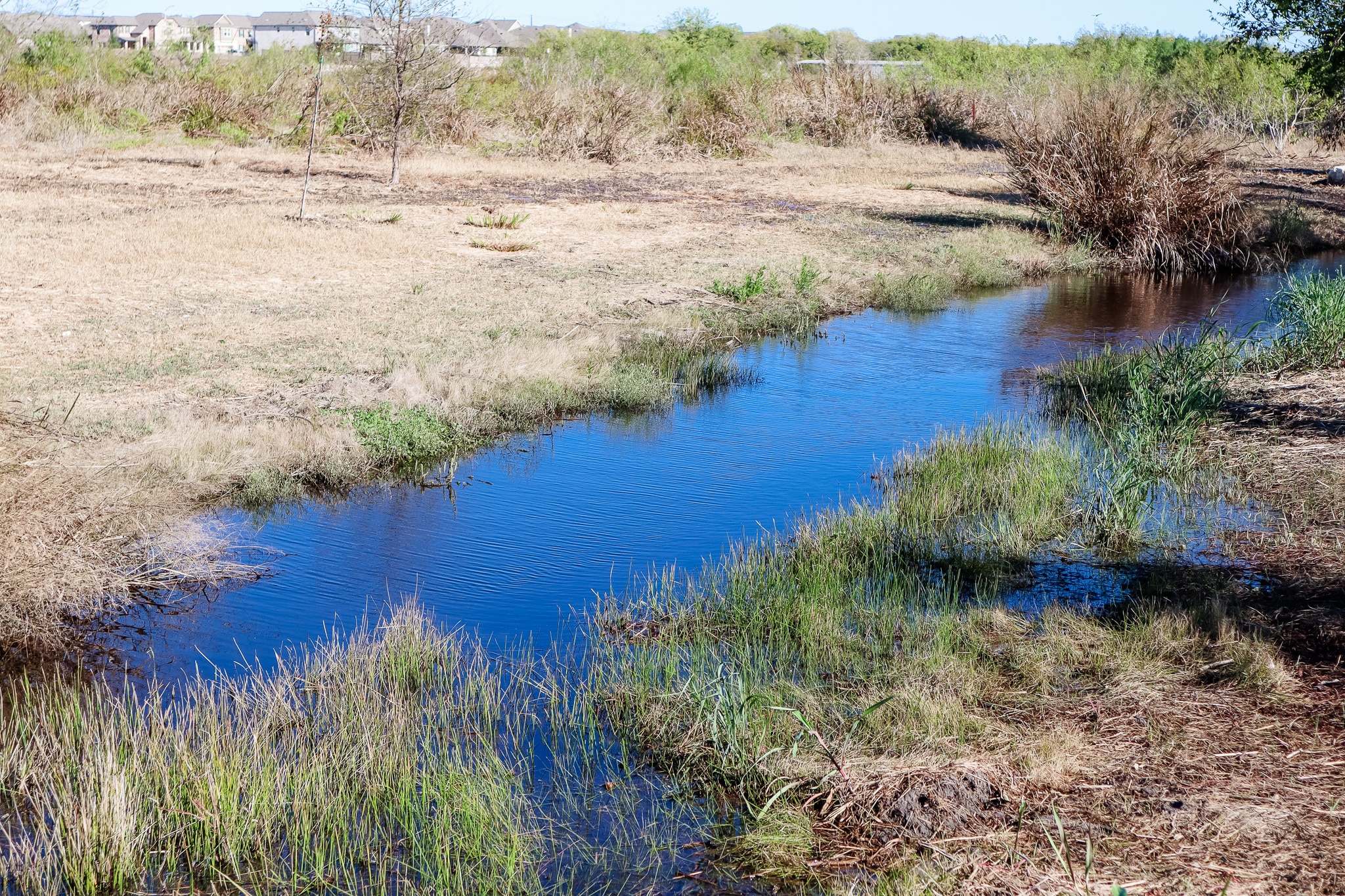
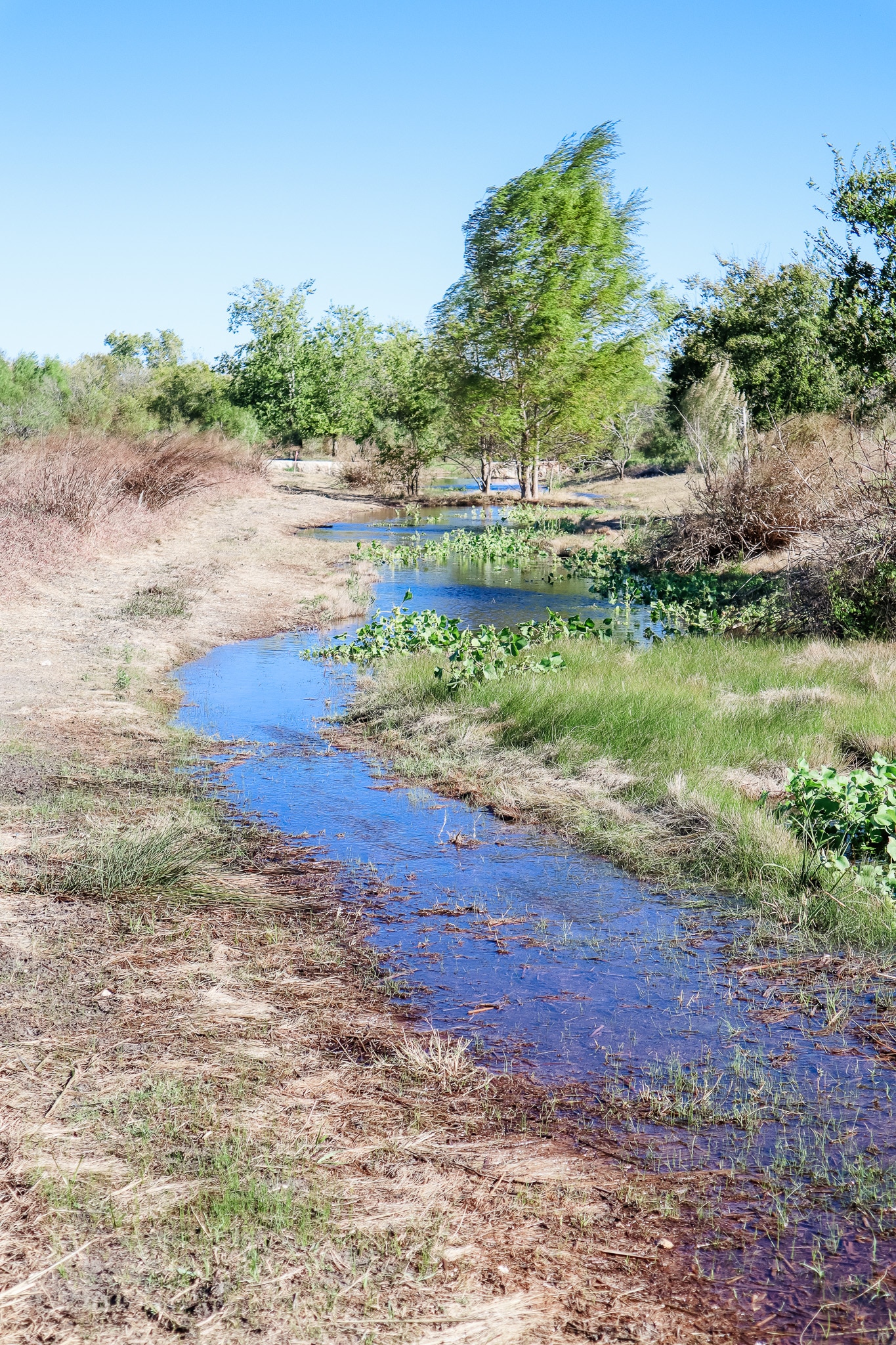
Stream Stabilization and Riparian Restoration
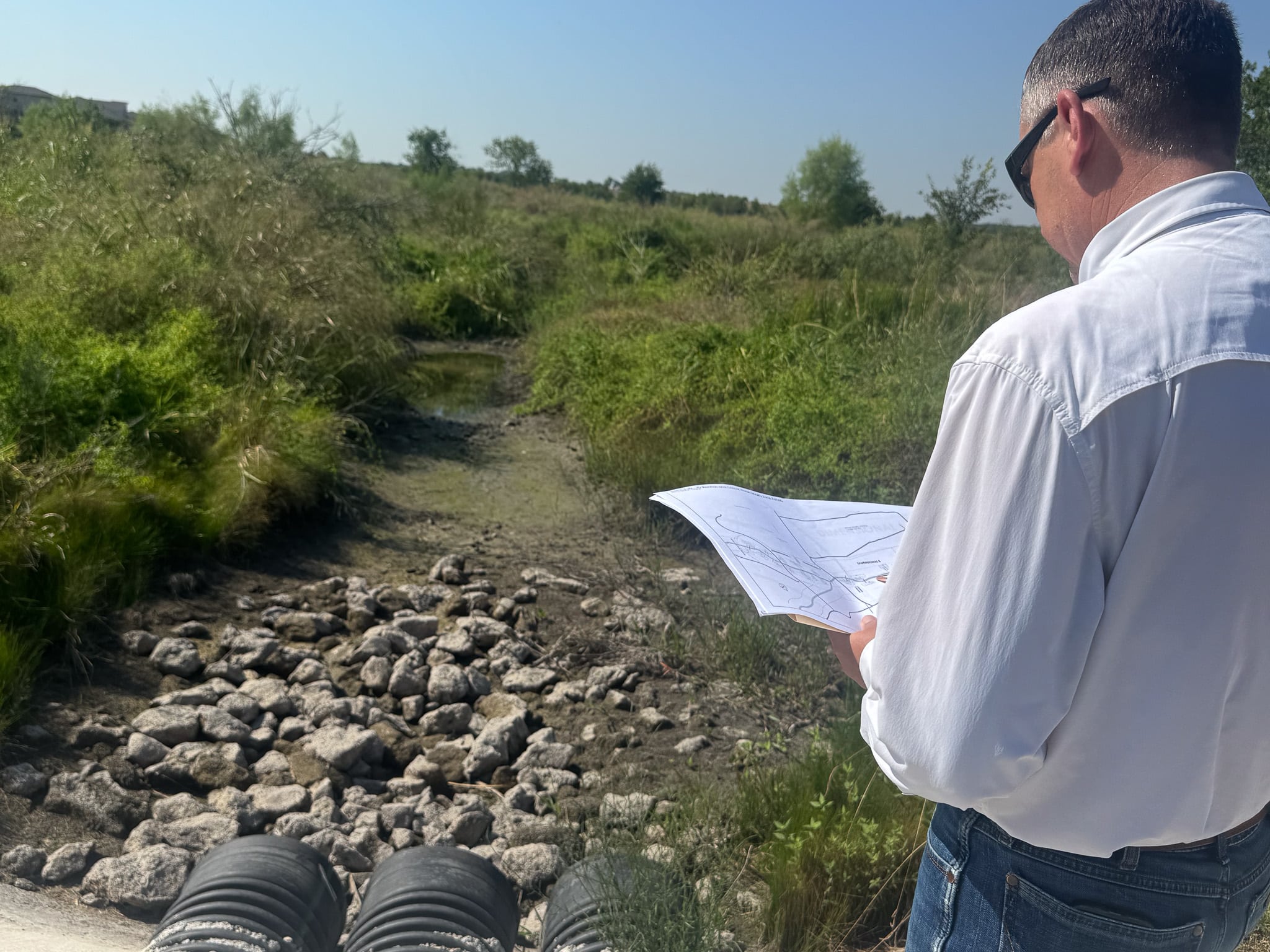
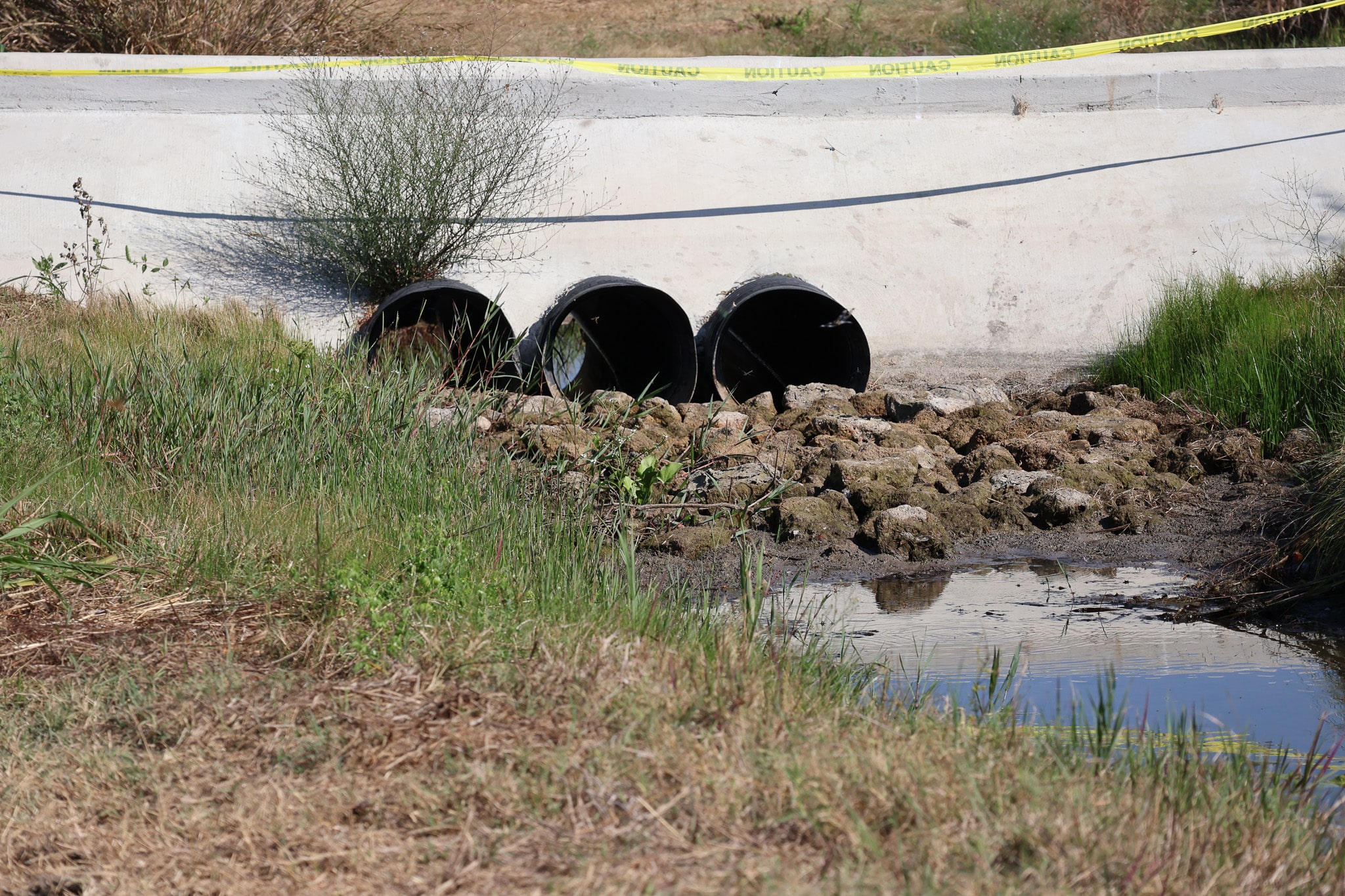
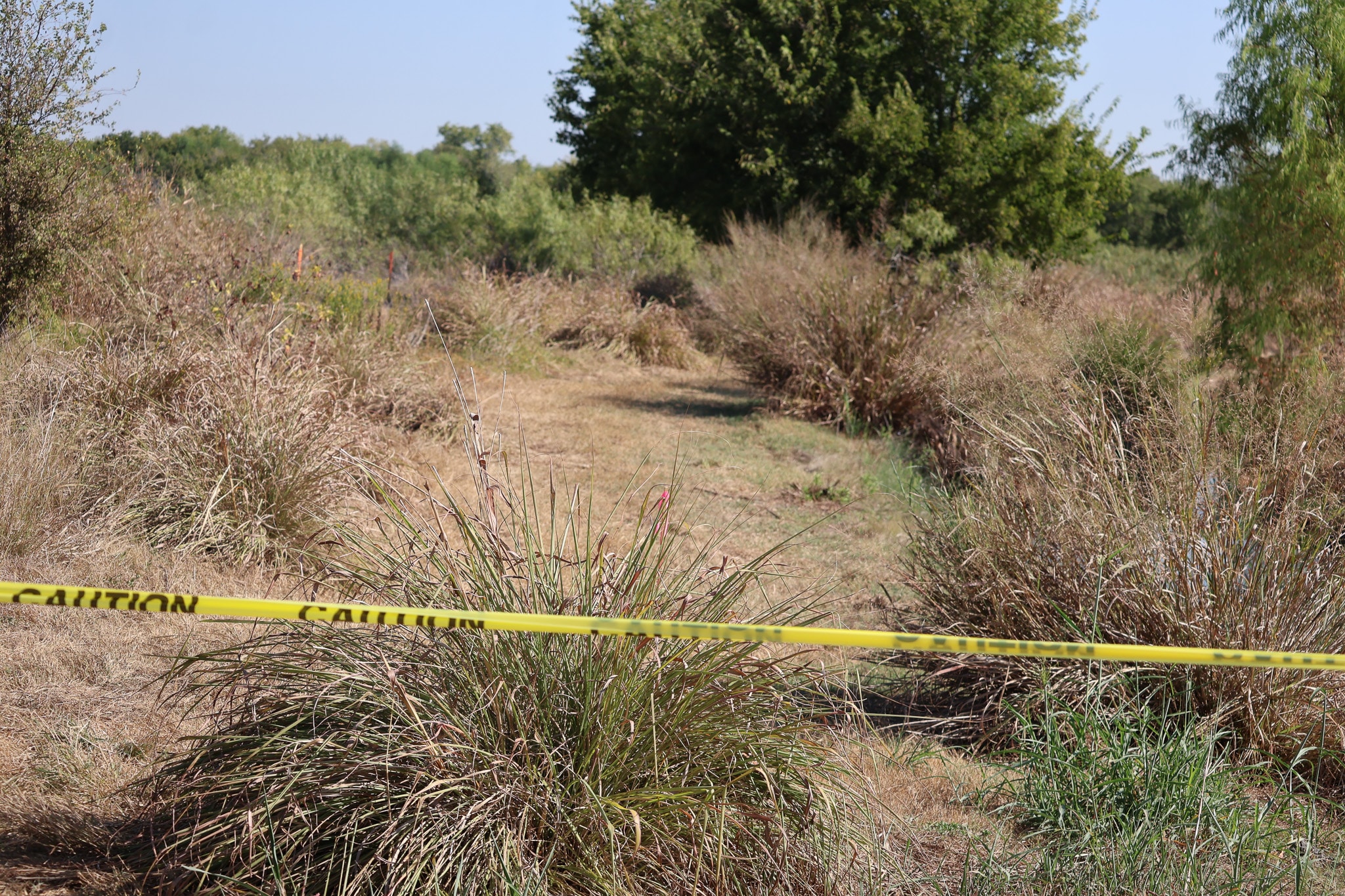
BPI Partners completed a comprehensive riparian mitigation project in East Austin, restoring an eroded and invasive-dominated stream corridor into a stable, compliant, and fully functioning riparian buffer within a TCEQ-regulated Critical Water Quality Zone.
Environmental and Hydrologic Assessment
At the start of the project, site conditions were evaluated to identify erosion risks, invasive vegetation impacts, and unmanaged stormwater flow. Streambank stability, sediment characteristics, pollutant pathways, and high-water mark elevations were assessed to establish a regulatory and ecologically sound baseline. This assessment informed the riparian mitigation design and ensured alignment with TCEQ requirements.
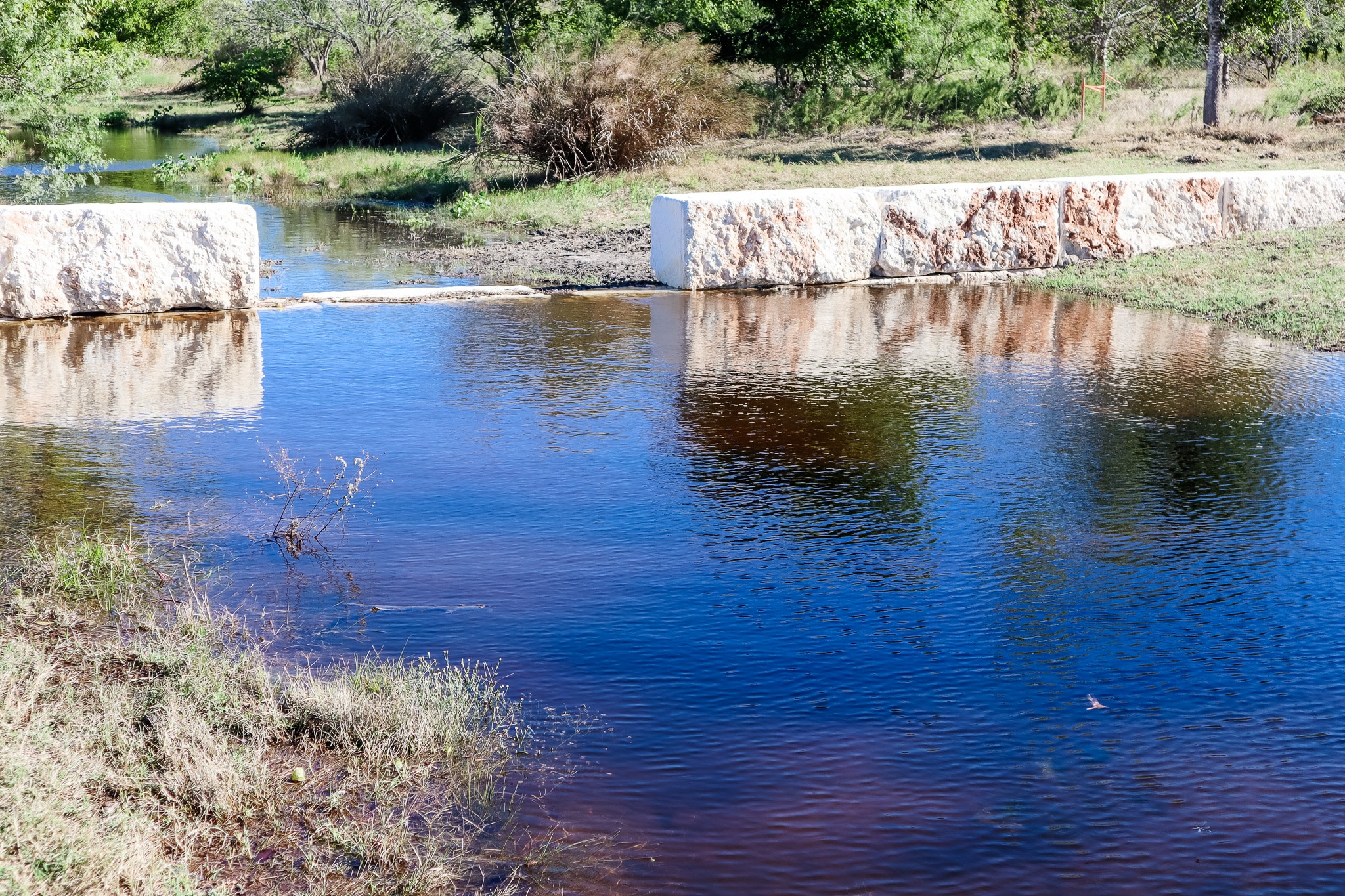
Phase 2: Grade Control Structure Installation
Channel Stabilization and Flow Management
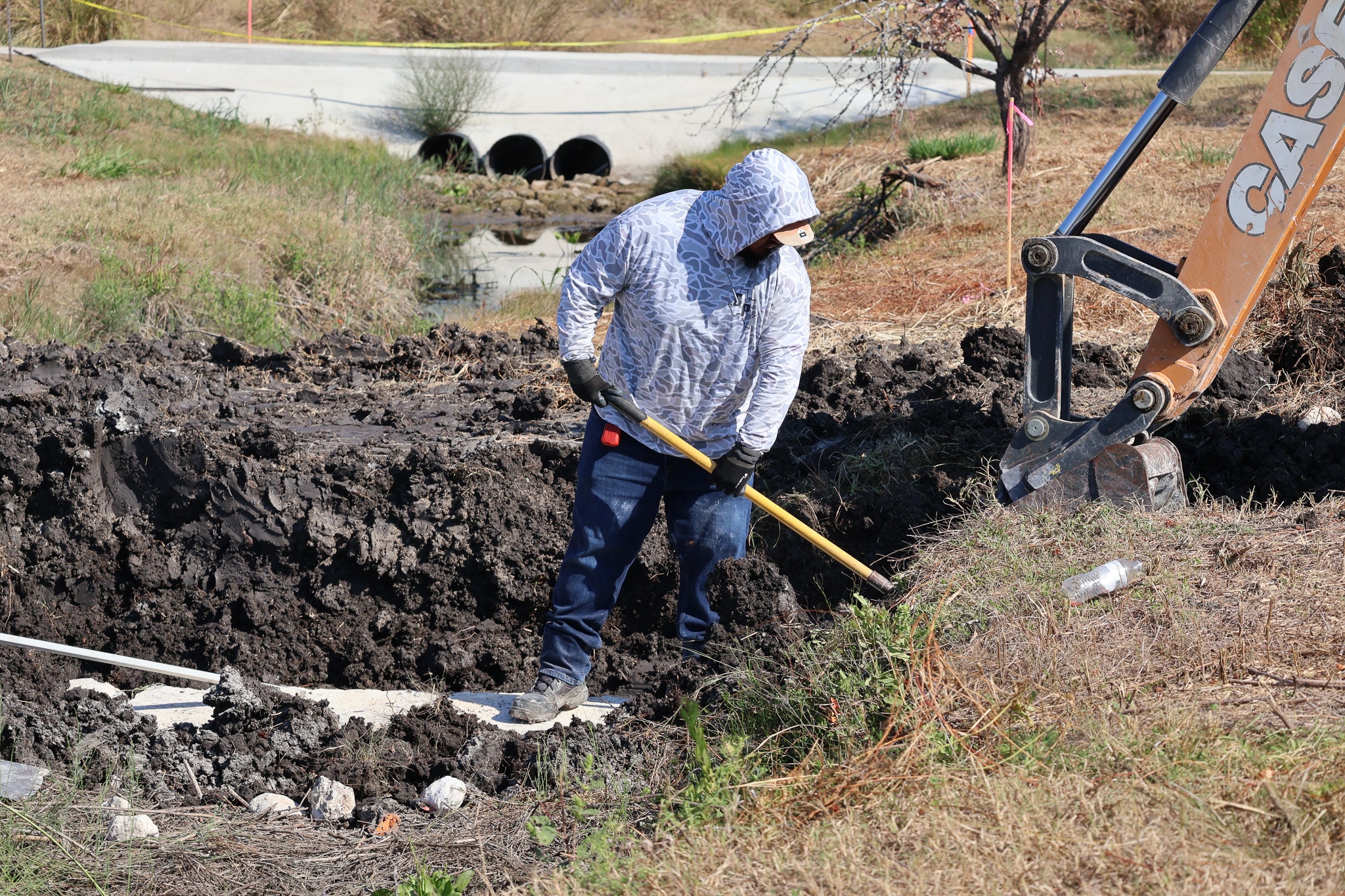
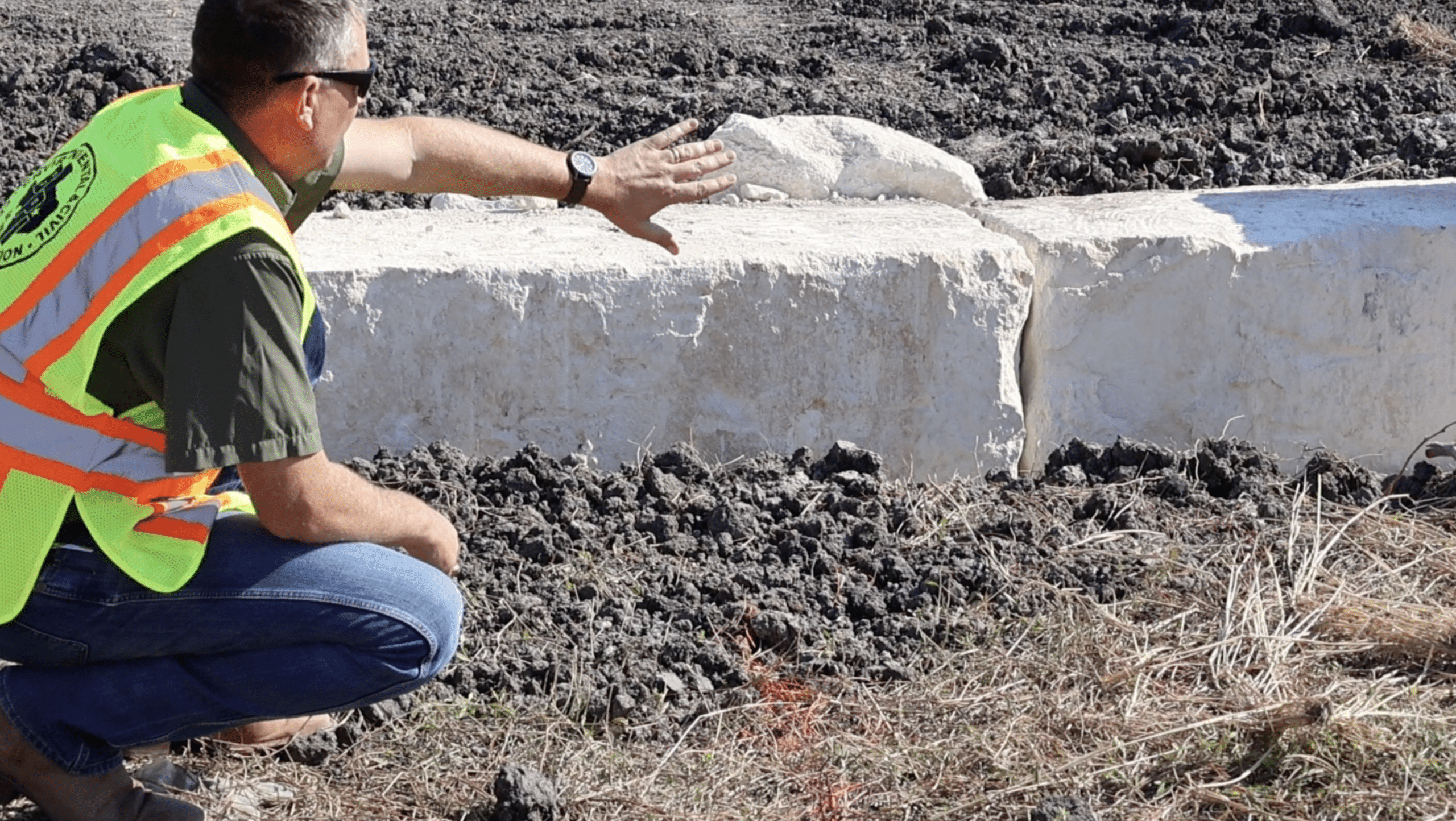
To stabilize the stream channel and prevent further incision, engineered Grade Control Structures (GCS) were installed at key elevations. These structures regulated stream grade, reduced erosive velocities, improved flow distribution, and supported long-term channel stability. GCS installation also enhanced flood attenuation and protected downstream infrastructure.
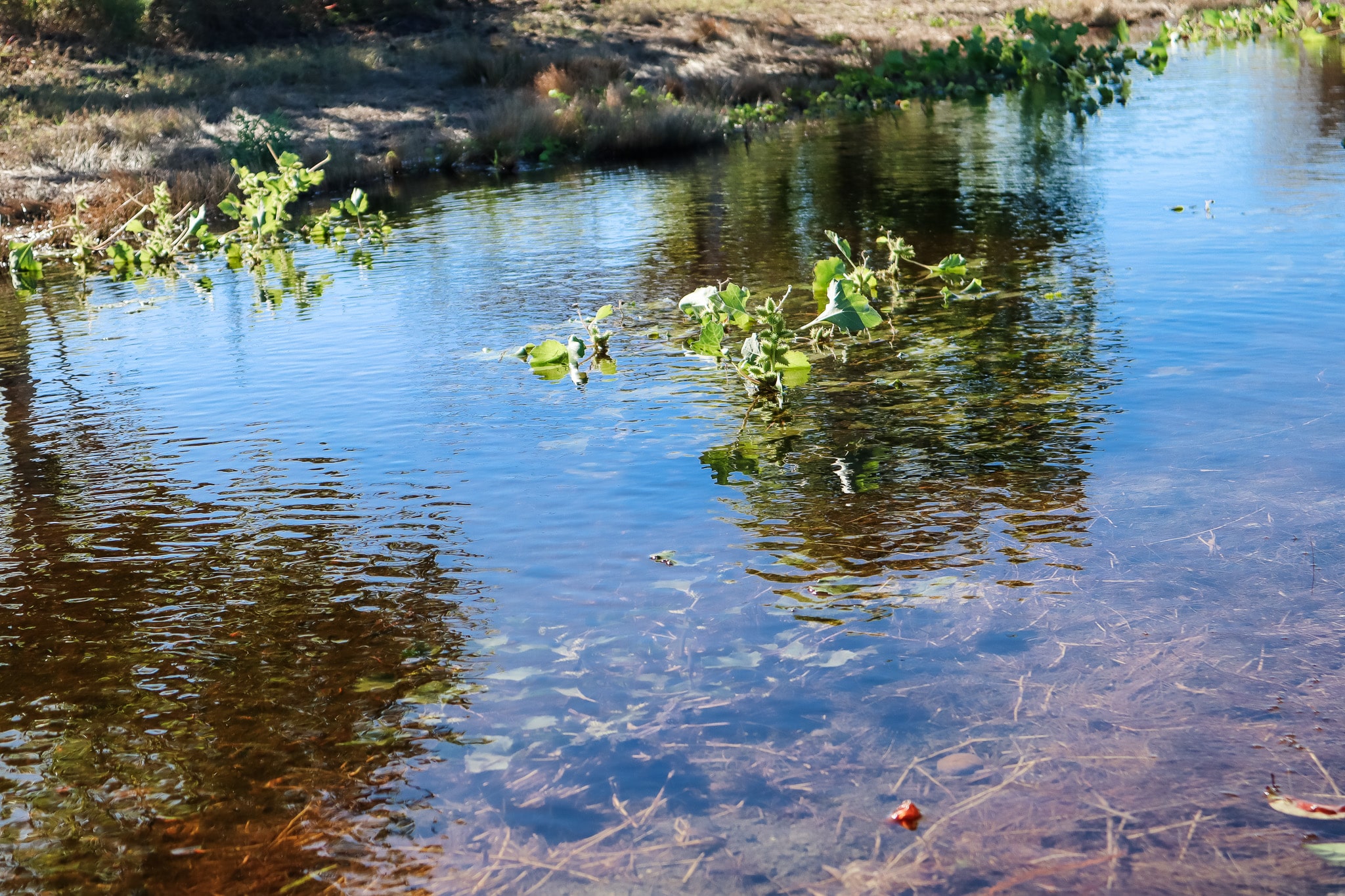
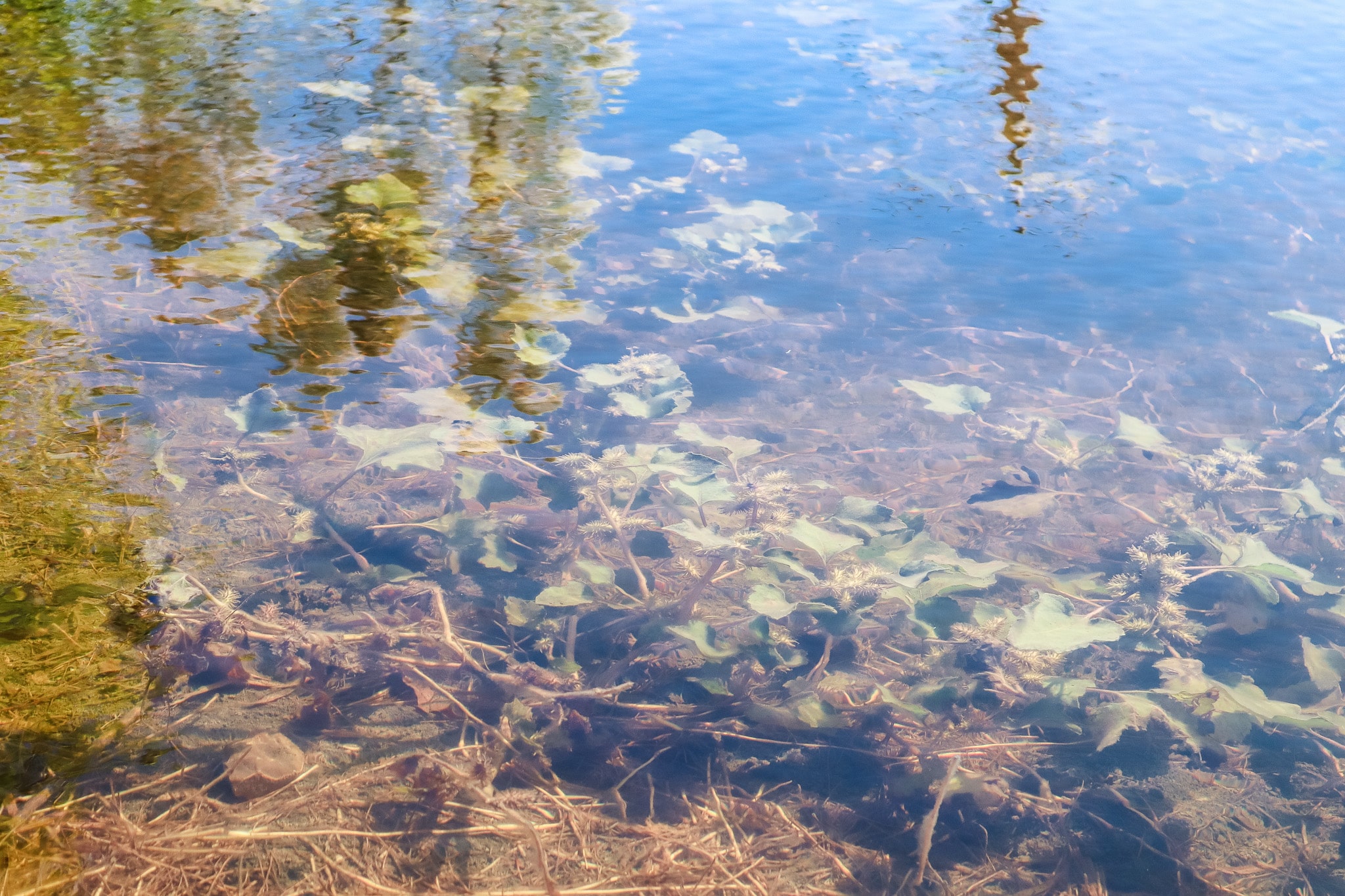
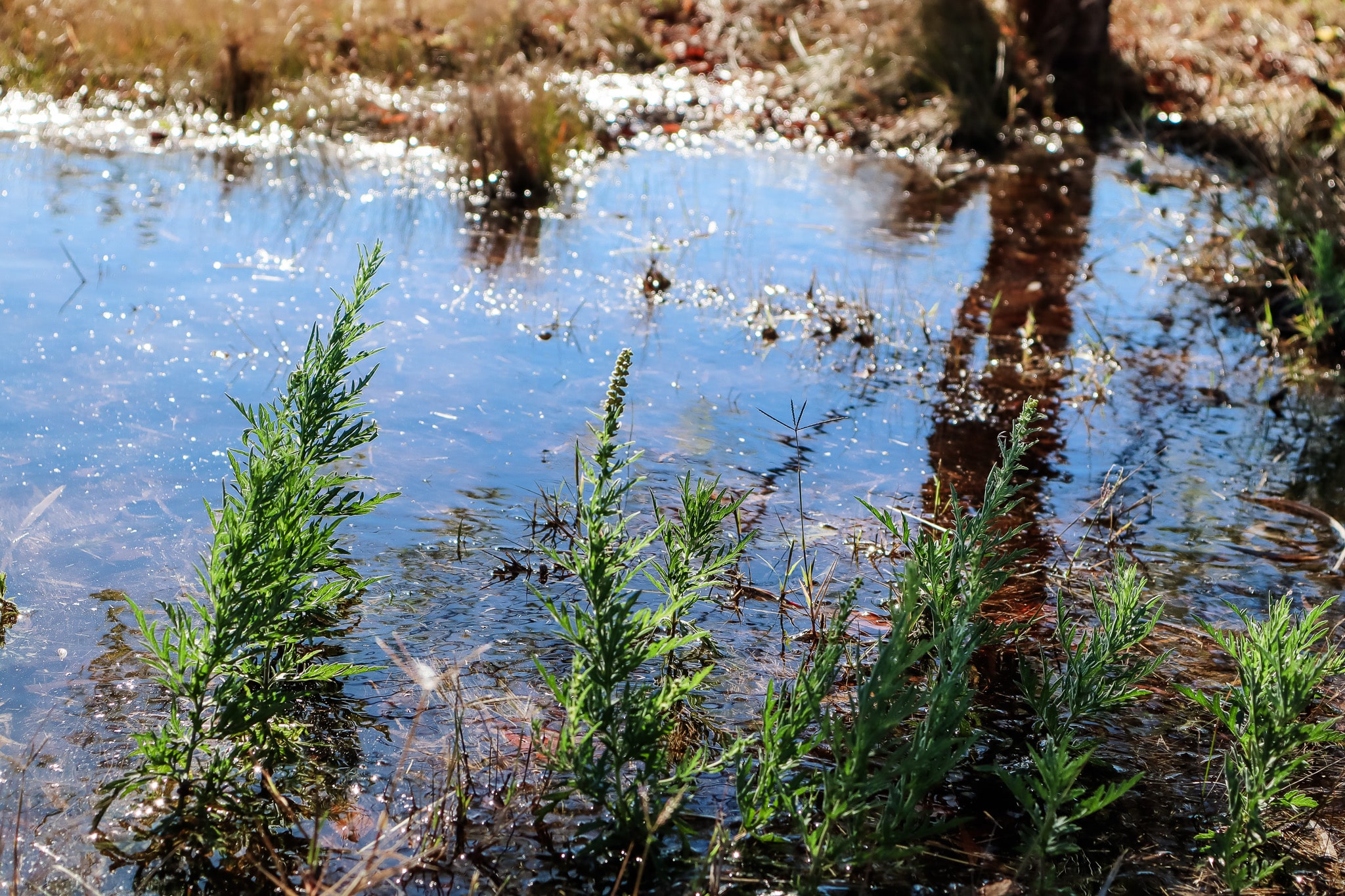
Water Quality and Habitat Foundations
Pollutant Filtration and Ecological Preparation
Following channel stabilization, the site was prepared to improve water quality and support long-term ecological function. Sediment and pollutant filtration capacity was enhanced, riparian soils were conditioned to support natural denitrification, and the channel was prepared for native vegetation establishment. These improvements strengthened both water quality performance and habitat resilience.
Phase 3: Habitat and Restoration Results
Native Vegetation and Riparian Buffer Performance
In the final phase, native vegetation was established to stabilize streambanks, reduce erosion, and filter pollutants before runoff reached downstream waterways. The restored riparian buffer improved habitat connectivity, supported wildlife, and enhanced overall watershed health. The completed system now functions as a high performing green infrastructure asset.
MCKINNEY CROSSING
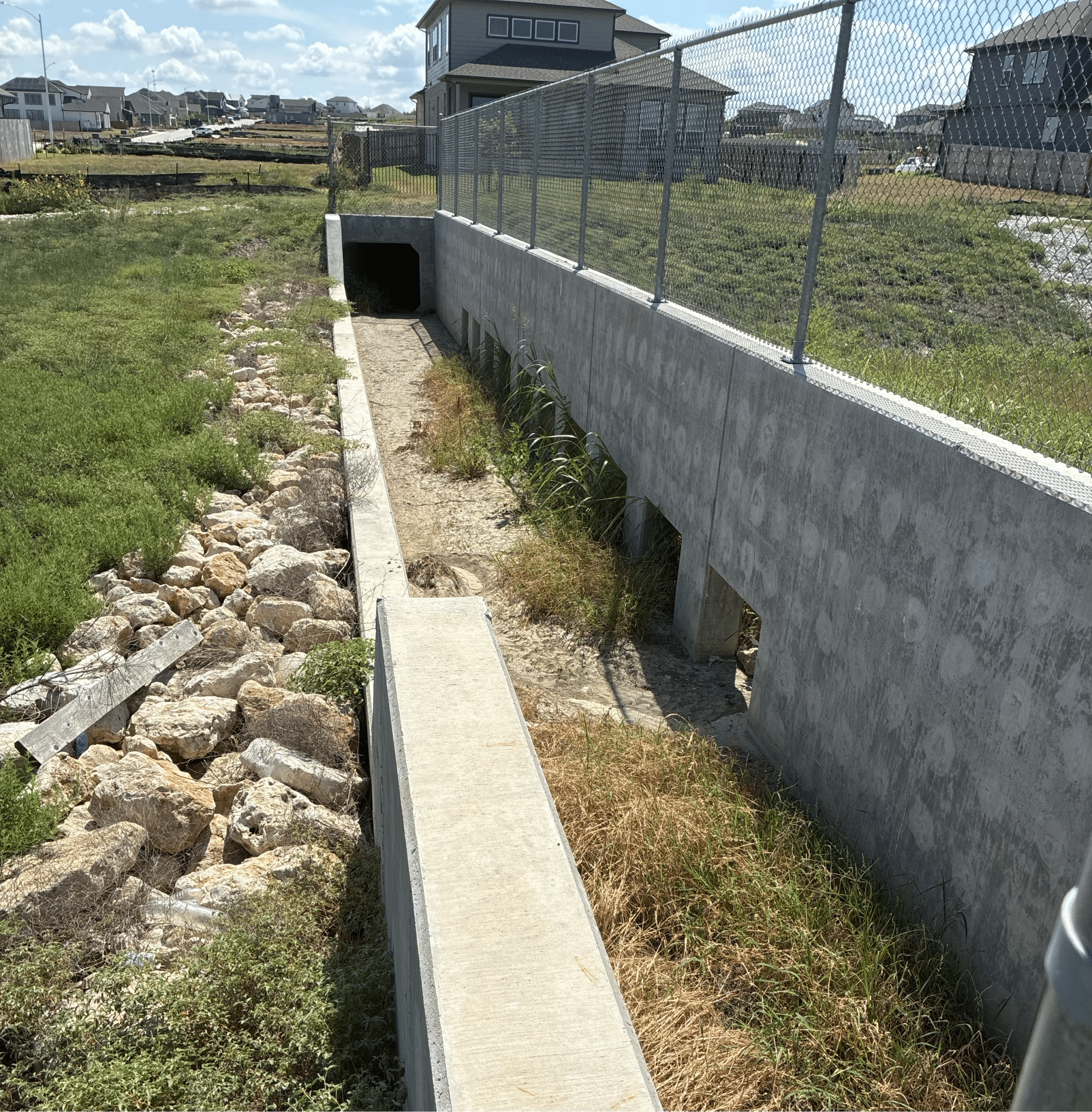
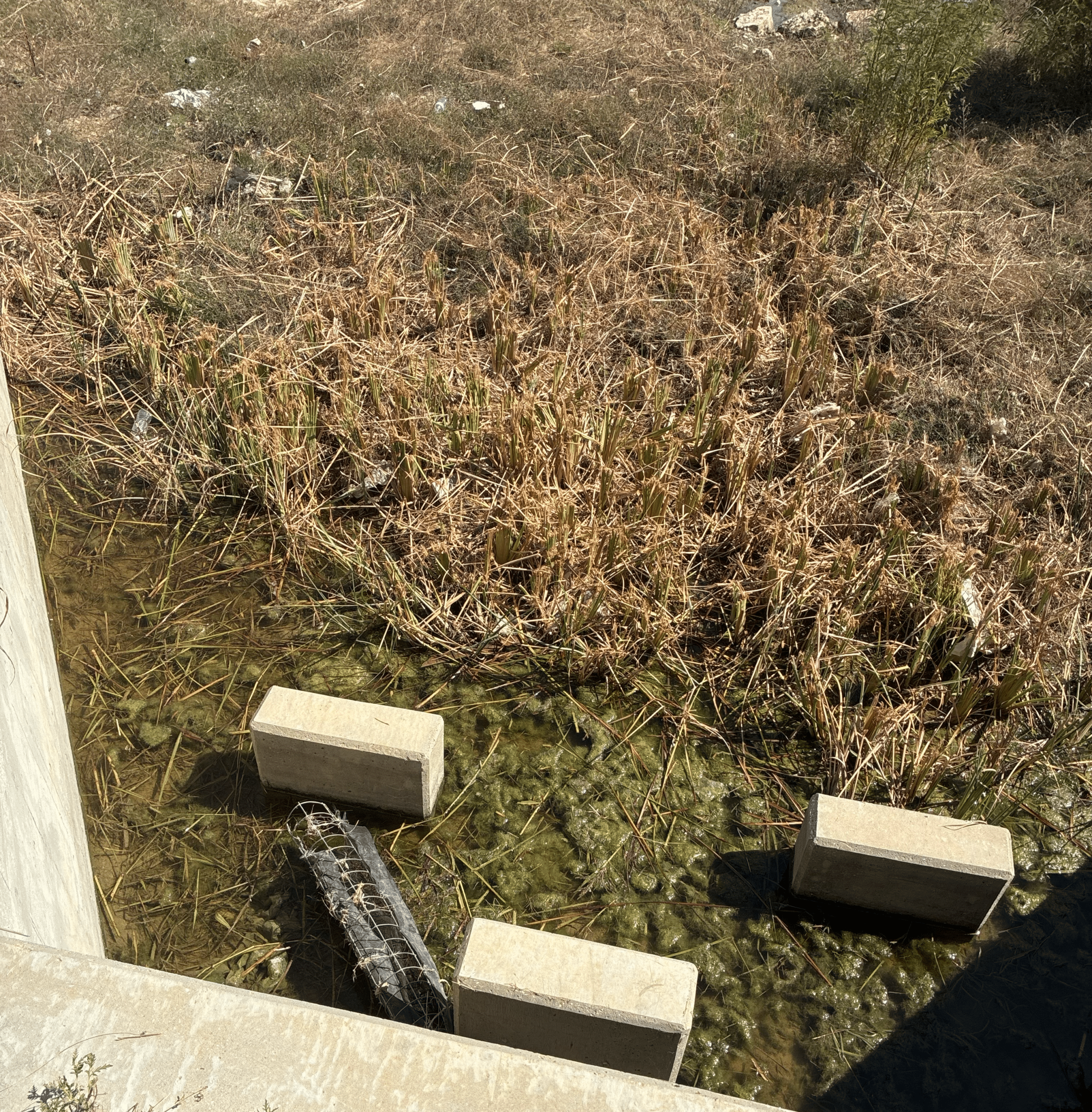
Sediment and Debris Removal
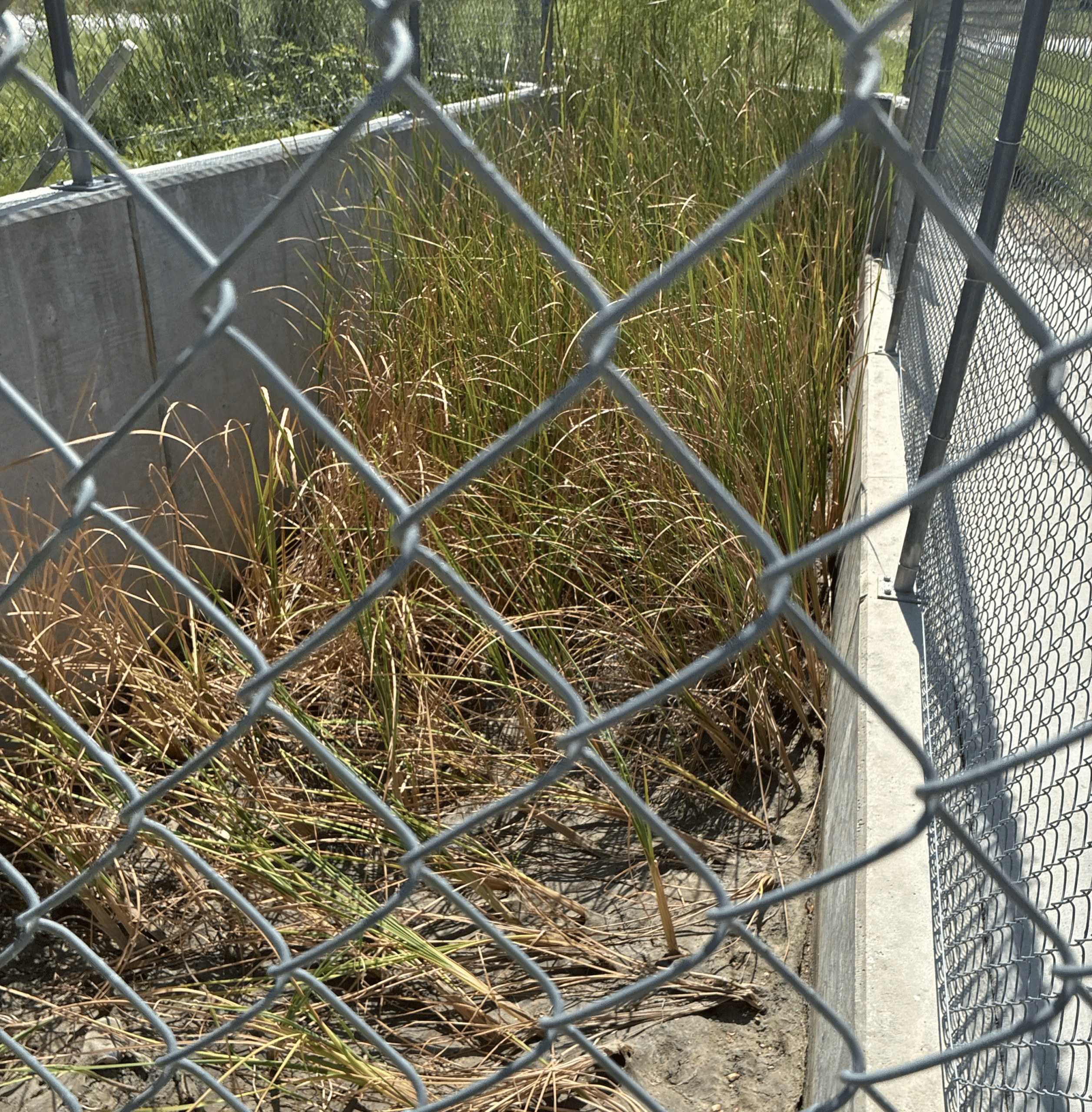
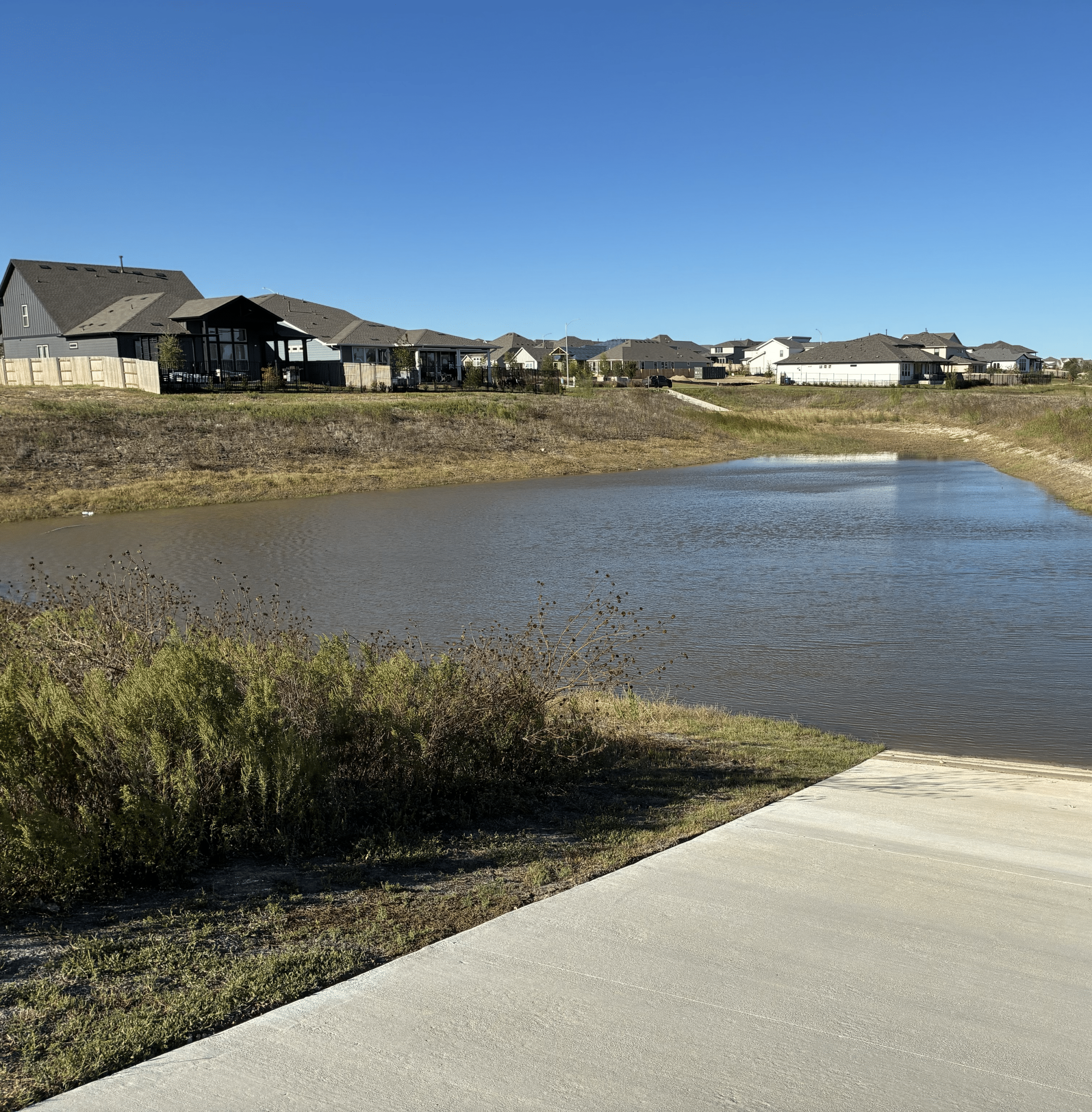
At this property, accumulated sediment and debris were removed to restore the stormwater detention pond’s original design capacity and water quality performance. Inspections and cleanouts were completed before significant volume loss occurred, with trash racks, splitter boxes, and energy dissipation features cleared and stabilized. All removal activities were documented to support regulatory compliance and long-term maintenance planning for this Central Texas site.
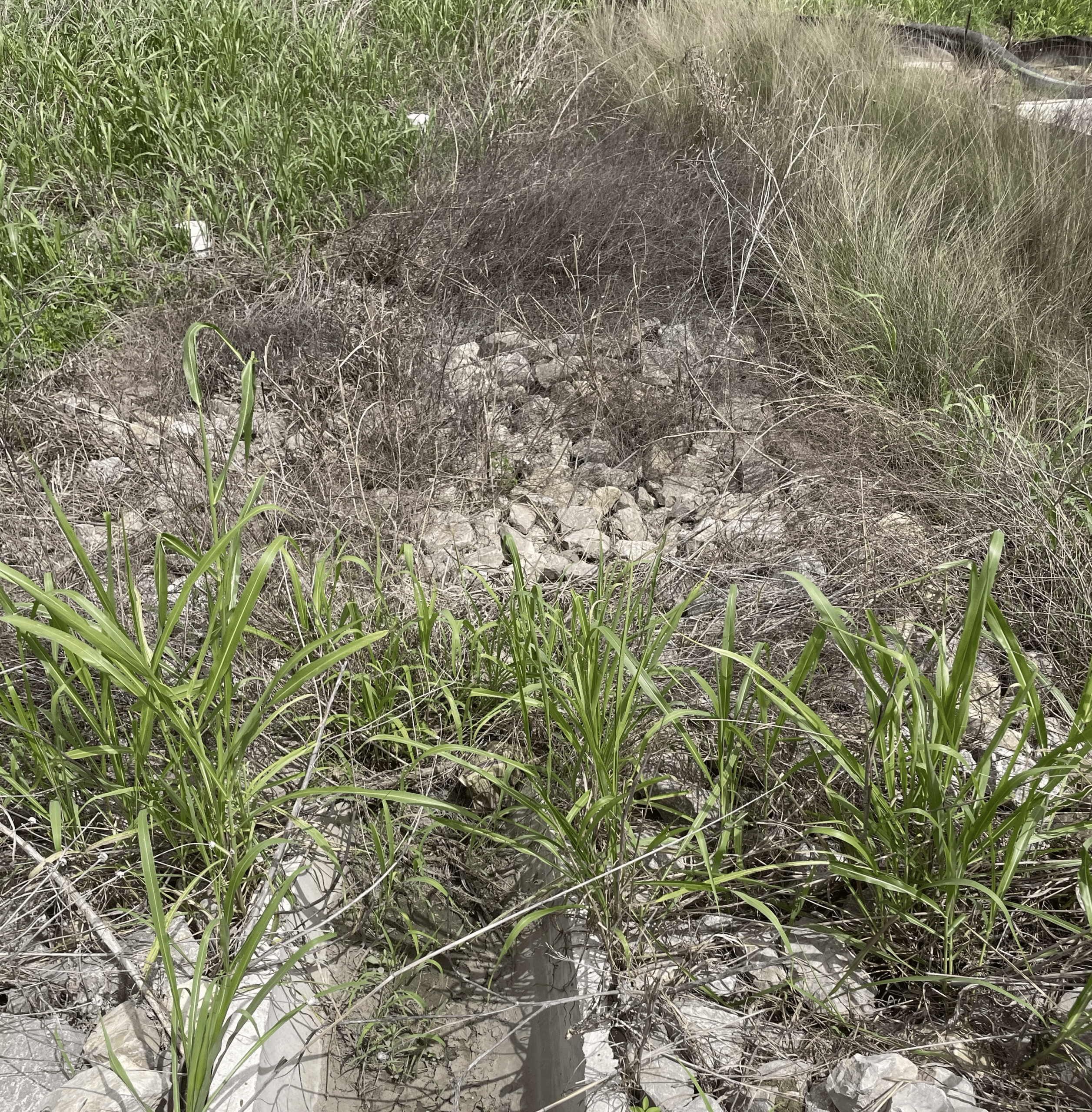
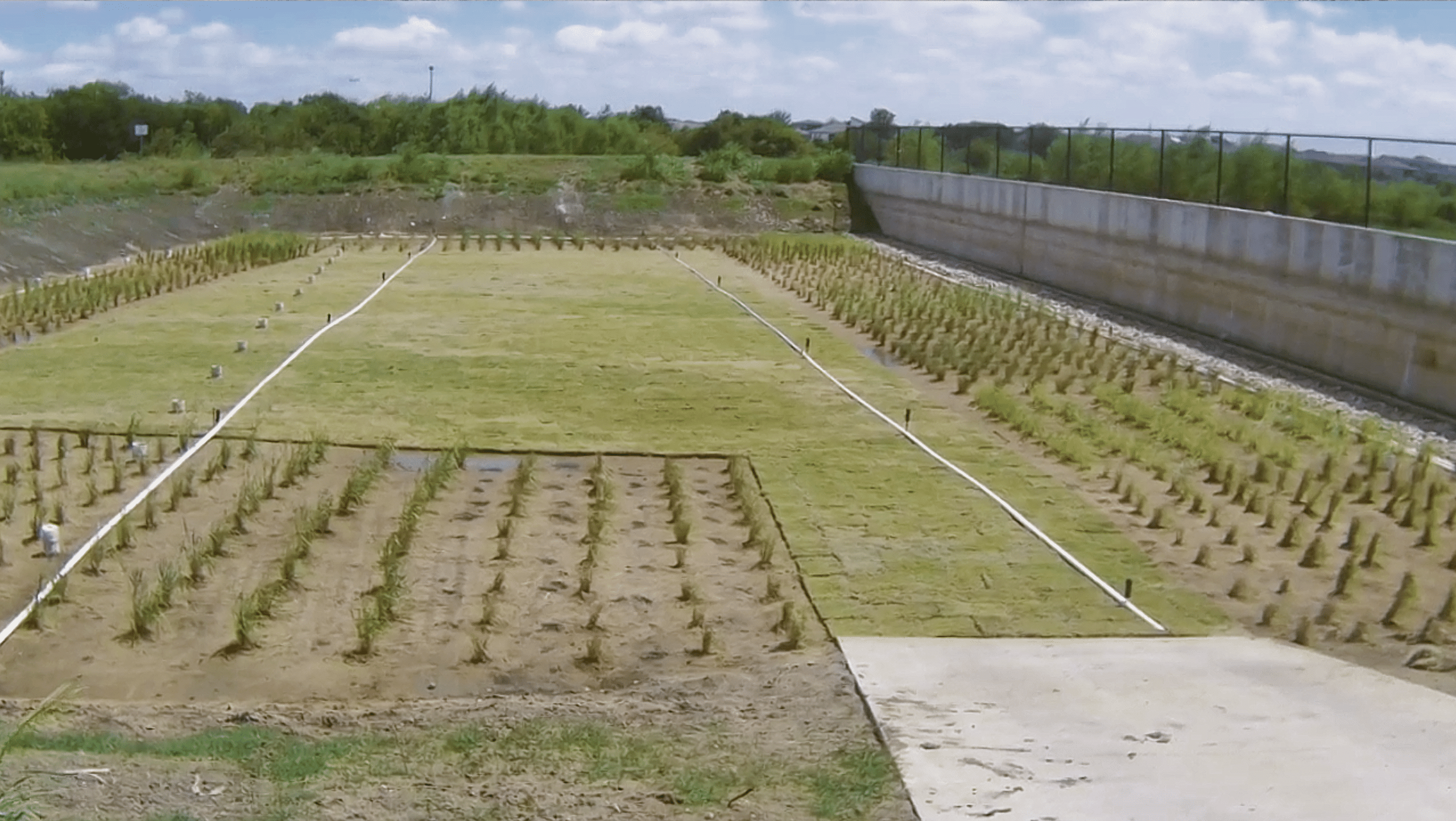
Vegetation Control
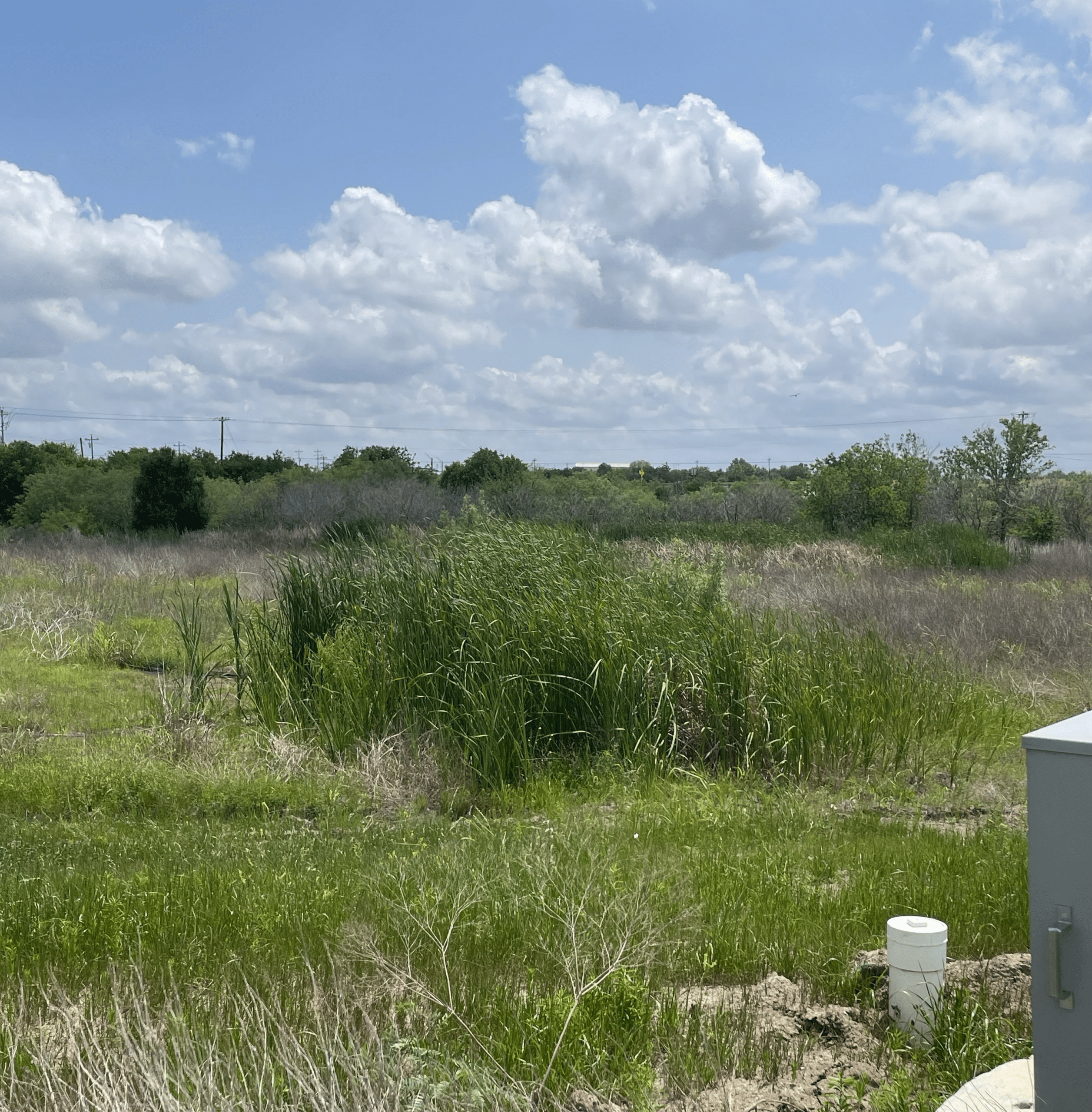
At this site, invasive species and unmanaged vegetation were removed to restore proper drainage, improve access, and protect stormwater infrastructure. Berms and embankments were cleared and maintained to prevent woody root intrusion, while revegetation was implemented to stabilize soils and support long-term pond performance. This vegetation management improved functionality, visibility, and ongoing maintainability of the stormwater system.
GRISENBECK RANCH
Structural & Erosion Repair
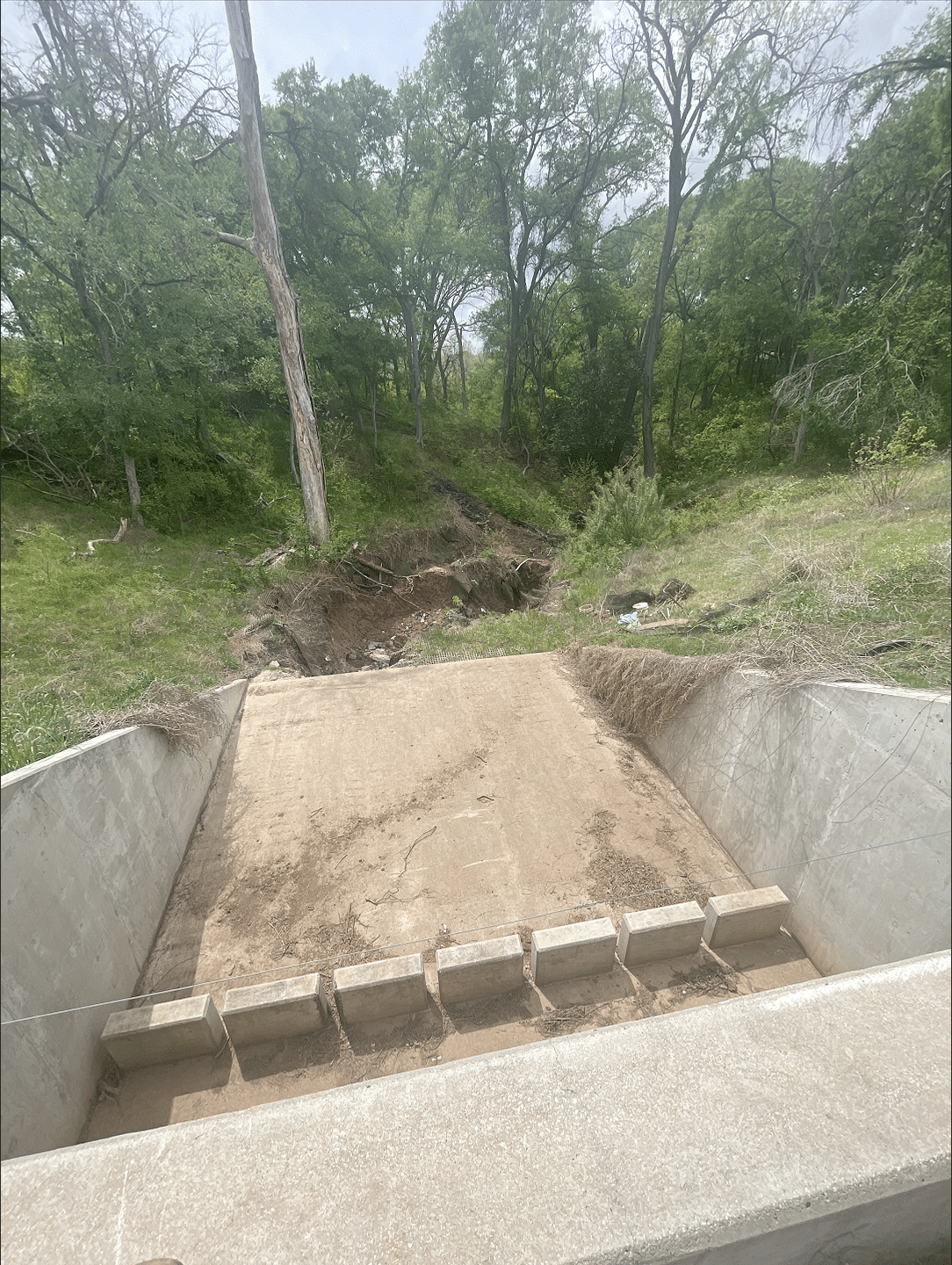
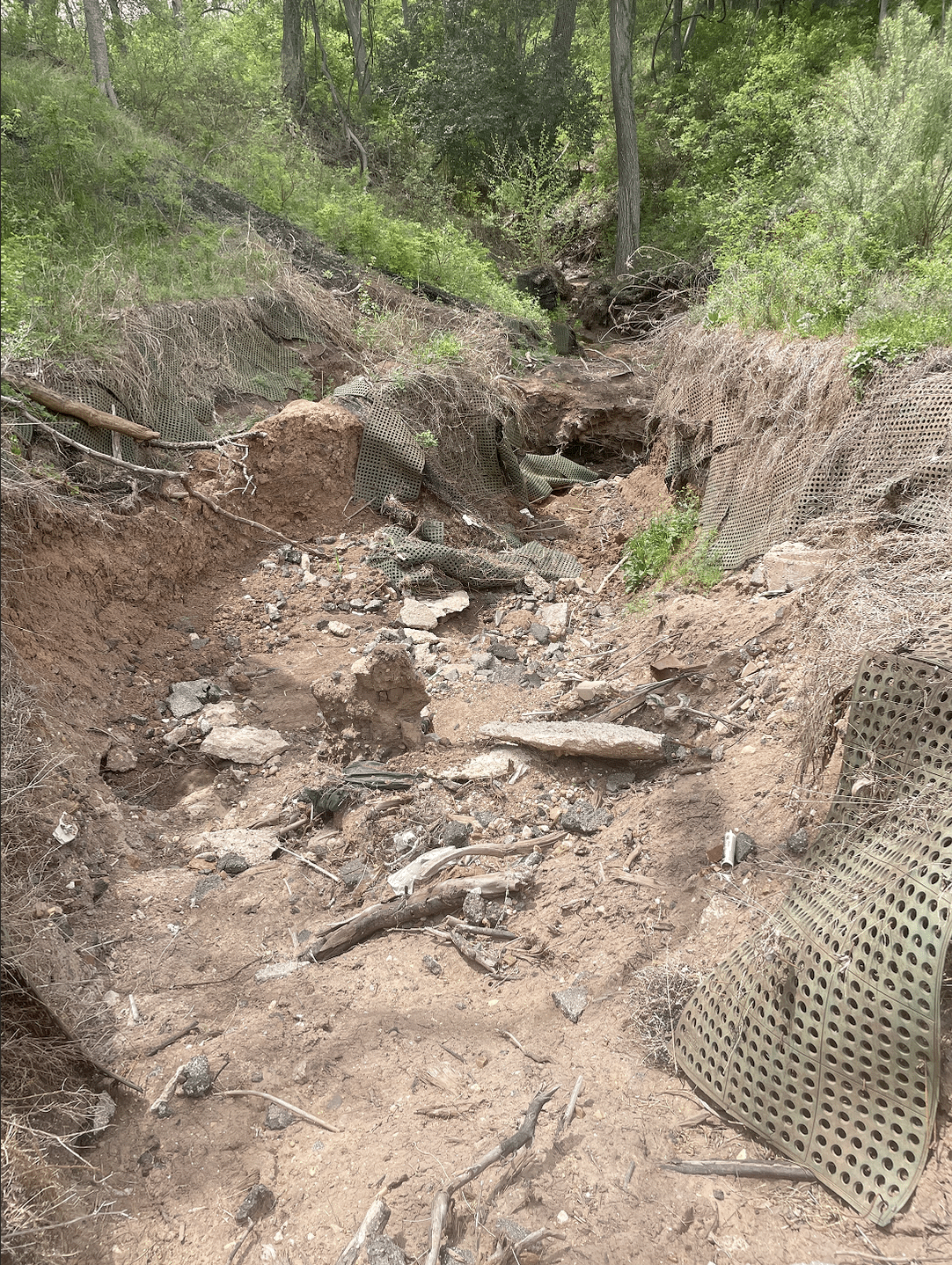
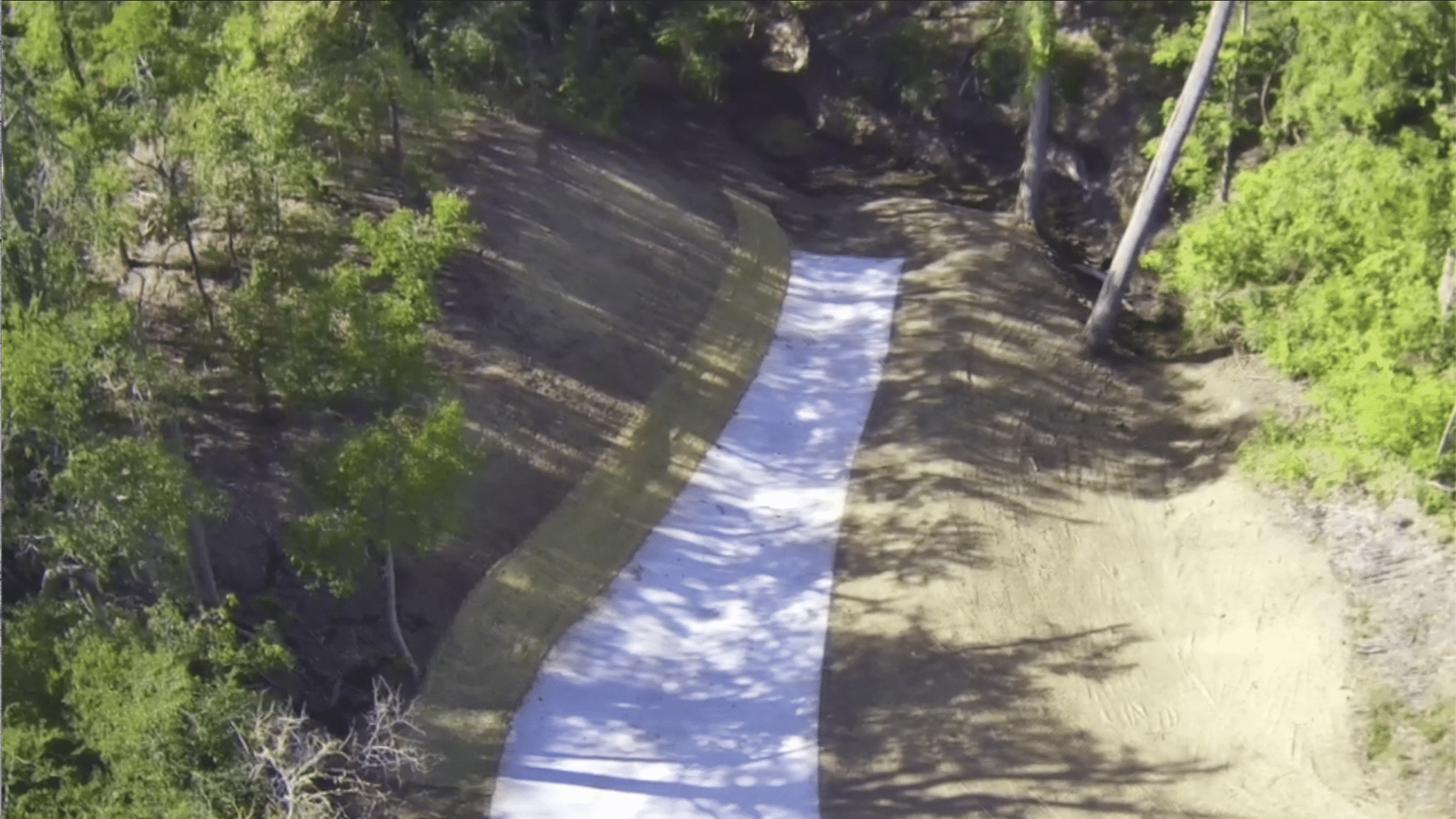
Inlets, outlets, spillways, and embankments were inspected and repaired to address early-stage erosion and prevent structural failure. Damaged areas were stabilized, riprap and headwalls were corrected, and erosion pathways were controlled to protect downstream conditions. These improvements restored structural integrity and reduced the risk of future maintenance escalation.
Proper Drainage / Outflow
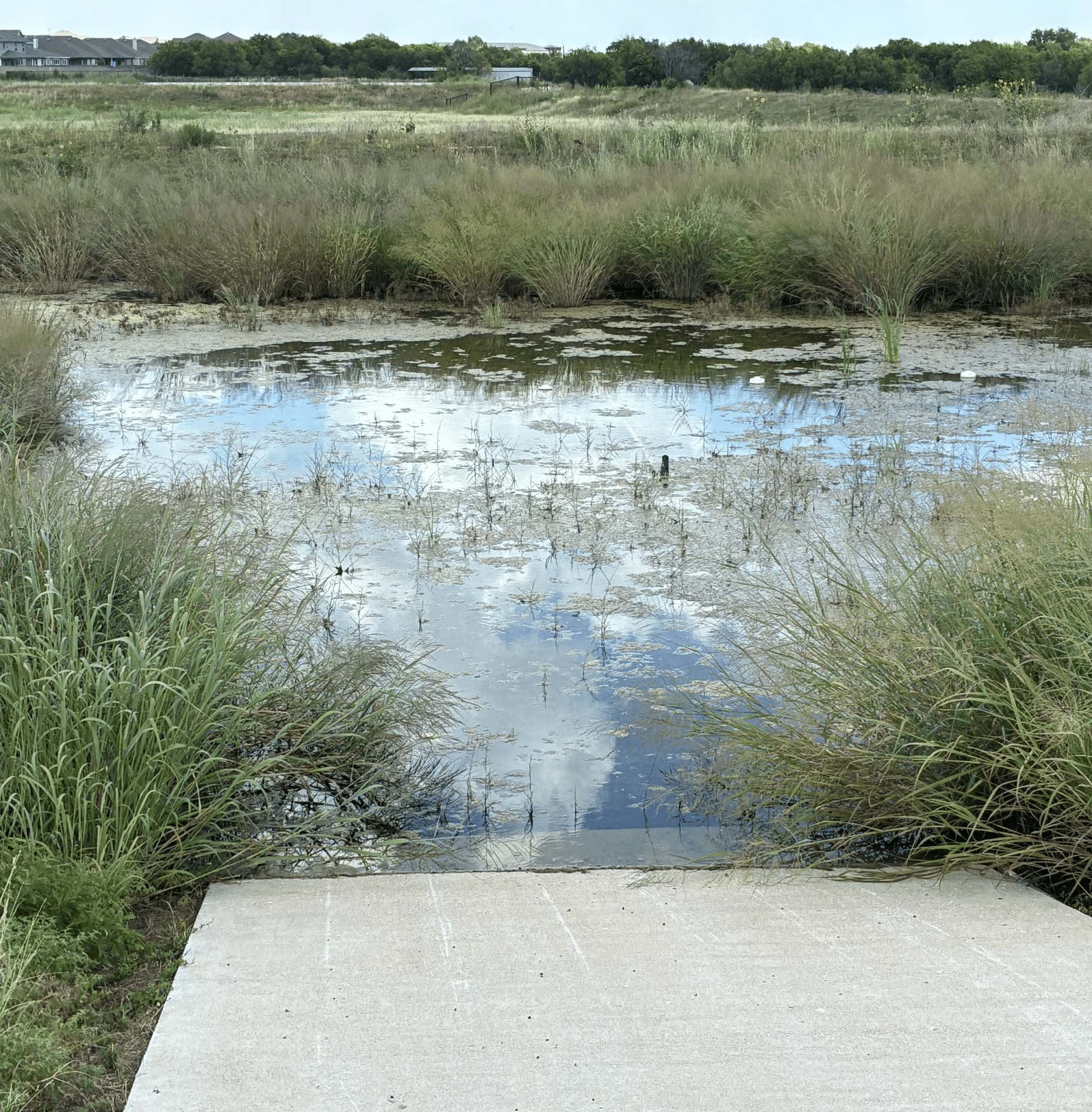
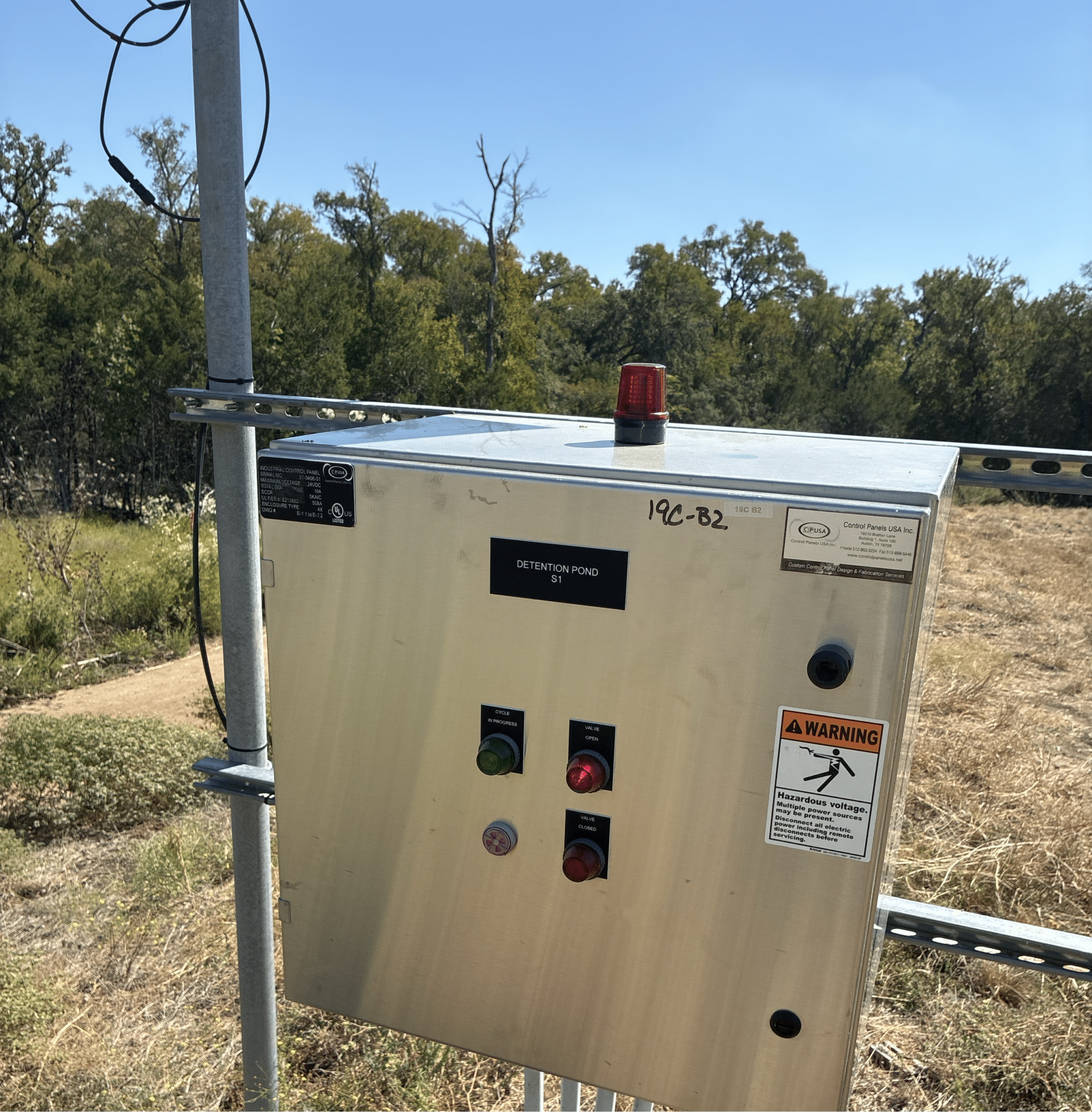
At this property, post-rainfall drainage issues were corrected to ensure the pond drained as designed. Outflow structures, lateral lines, and control systems were inspected, cleared, and restored to proper operation, allowing stormwater to move through the system efficiently. Excess vegetation and debris were removed to improve flow reliability and maintain long-term water quality performance.
MAYFIELD RANCH
Stormwater Pond Rehabilitation and Water Quality Restoration
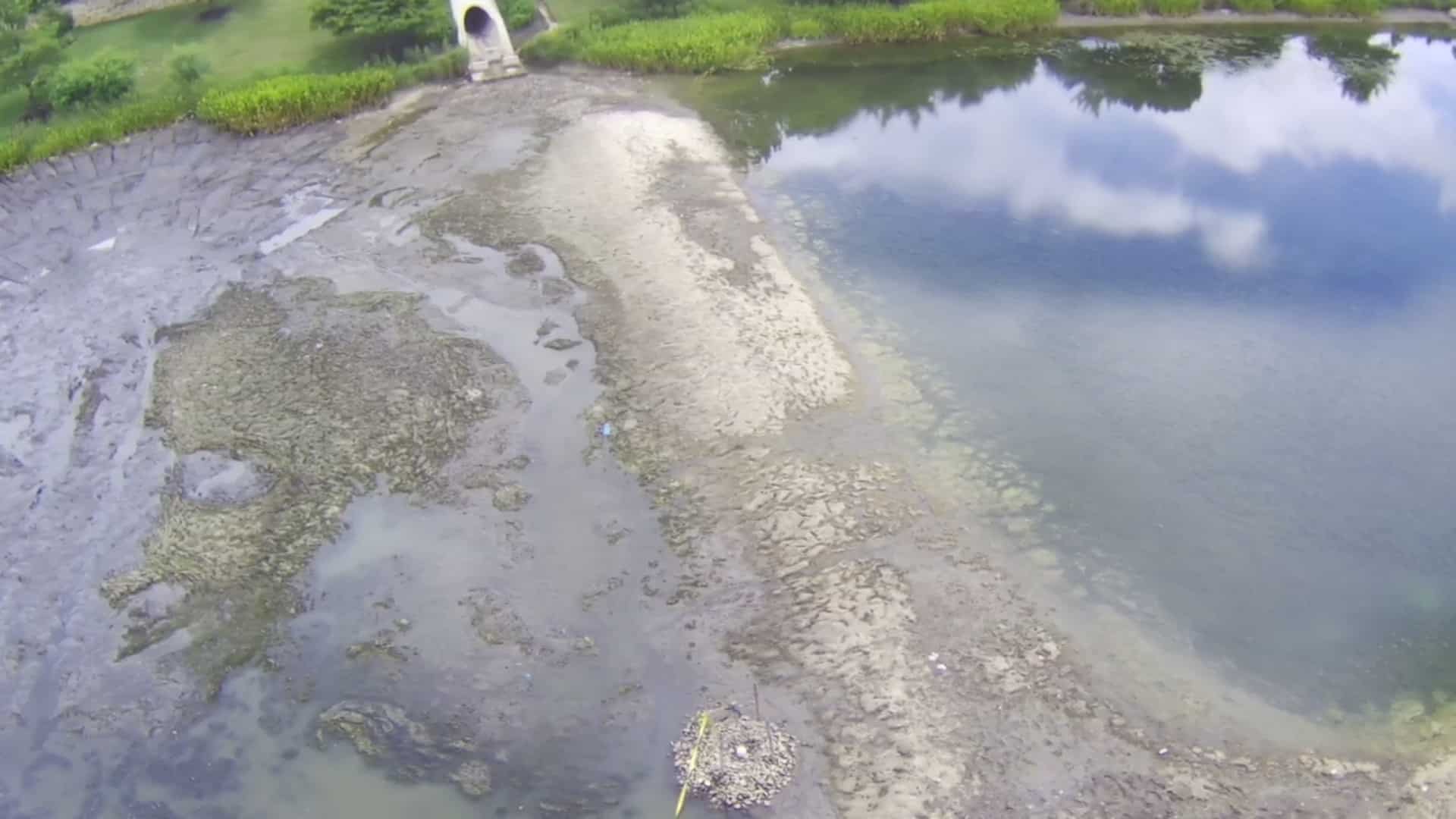
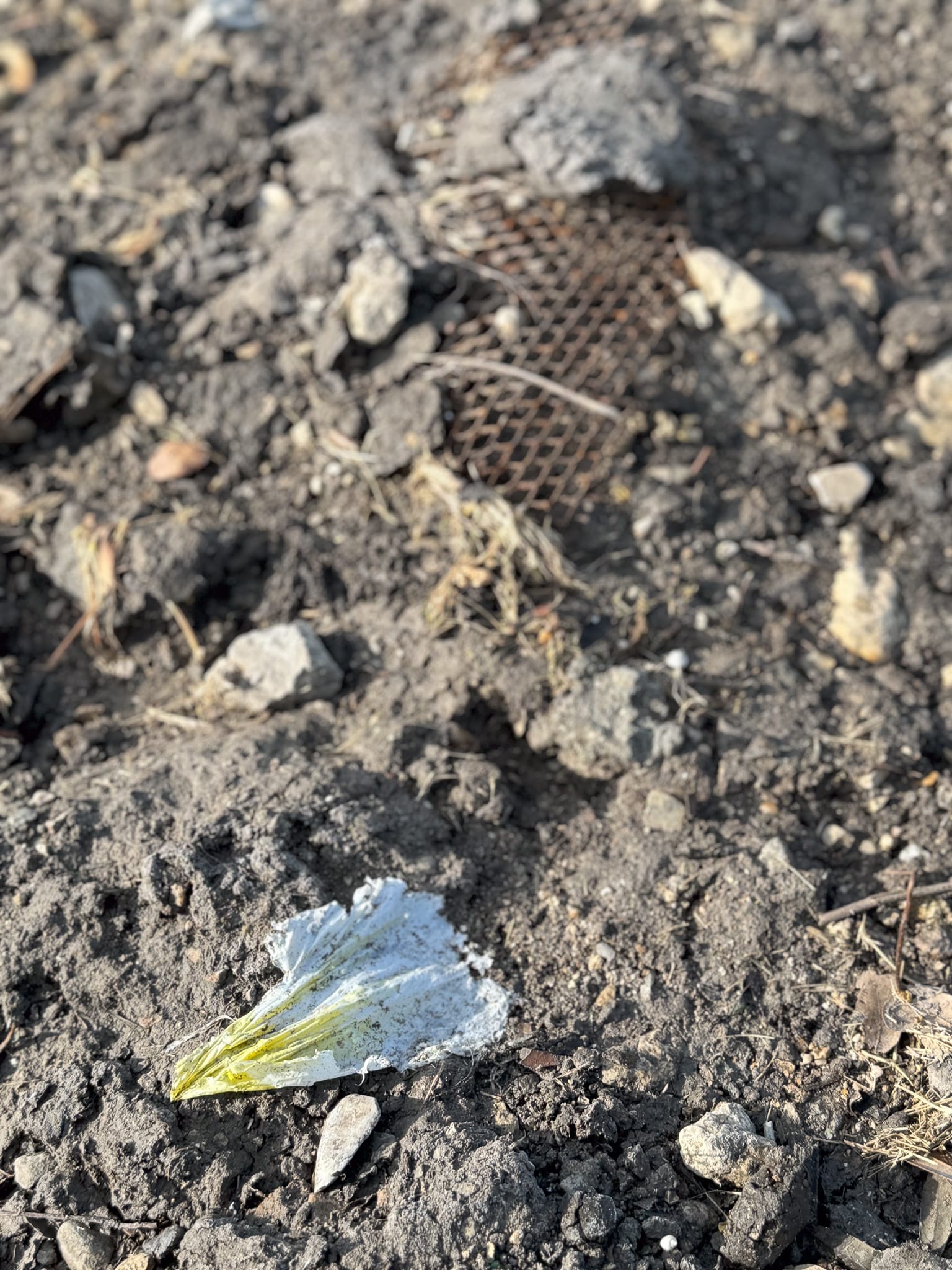
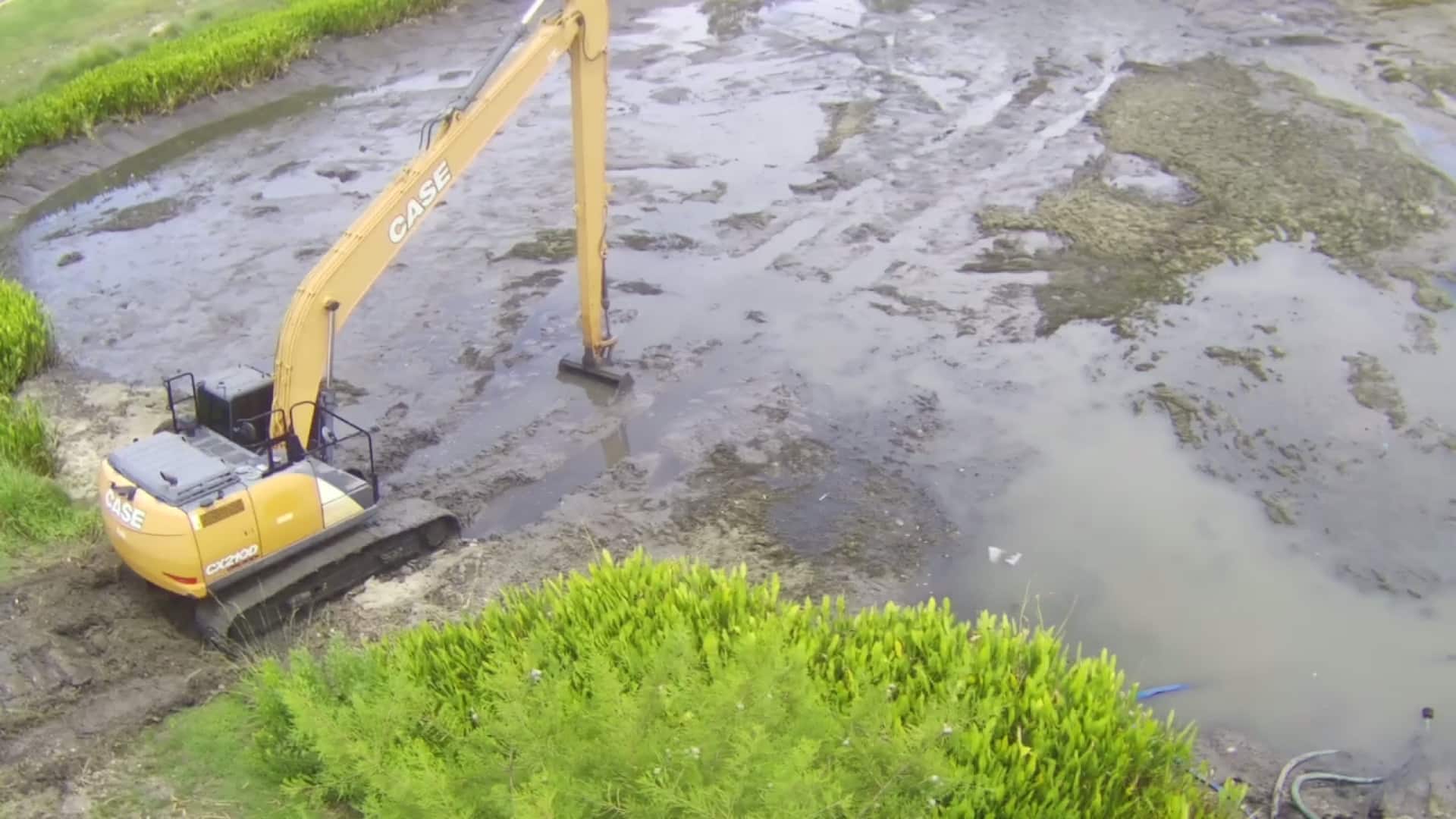
Before rehabilitation, the Mayfield Ranch water quality pond showed significant sediment accumulation, reduced storage capacity, and impaired stormwater performance. Unmanaged flow patterns, exposed pond banks, and limited vegetative coverage contributed to erosion, poor water clarity, and diminished pollutant filtration. These conditions reduced the pond’s ability to detain runoff effectively and increased maintenance risk while limiting long-term compliance and water quality function across the site.
Restored Stormwater Performance and Long-Term Water Quality Function
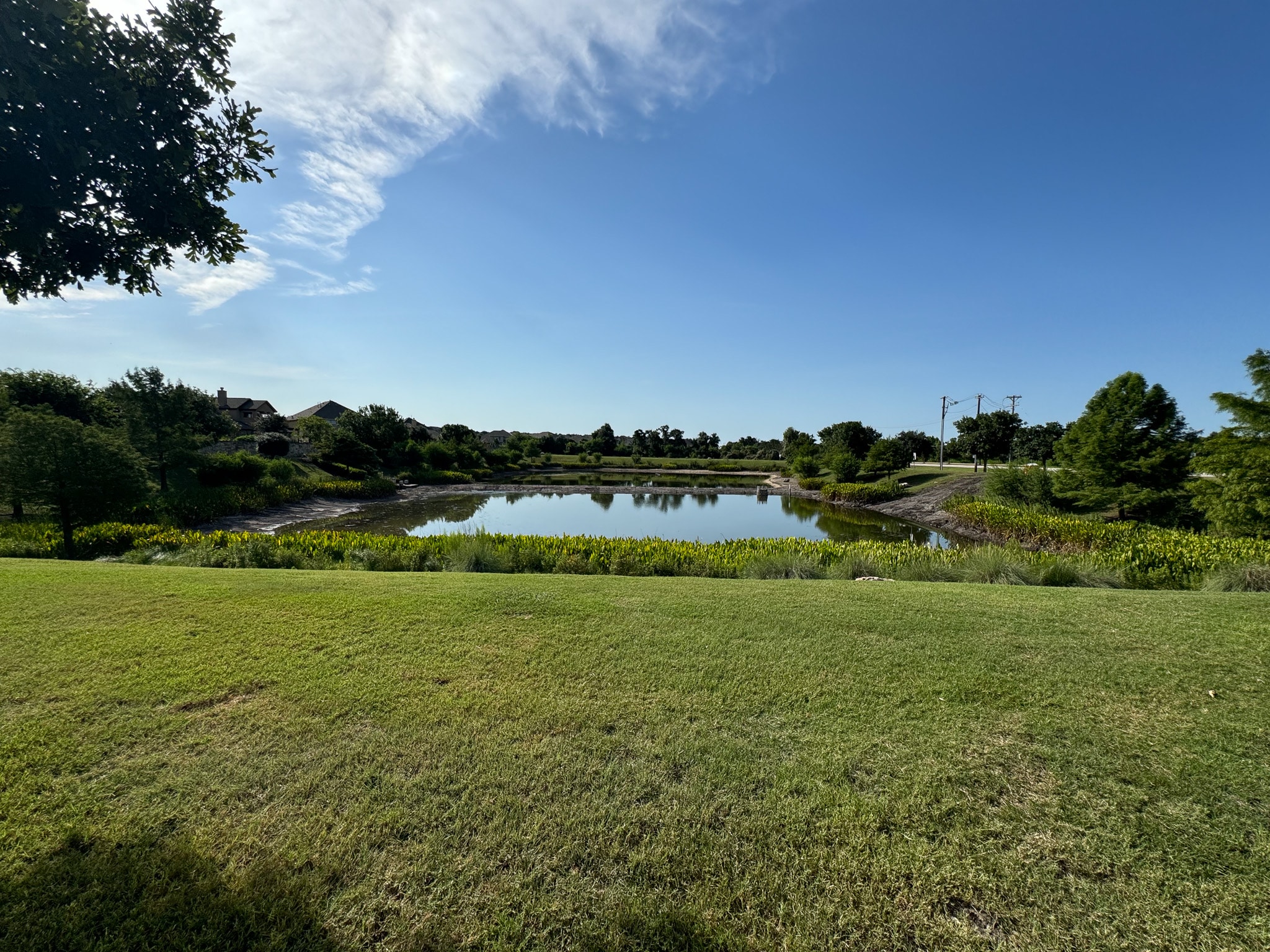
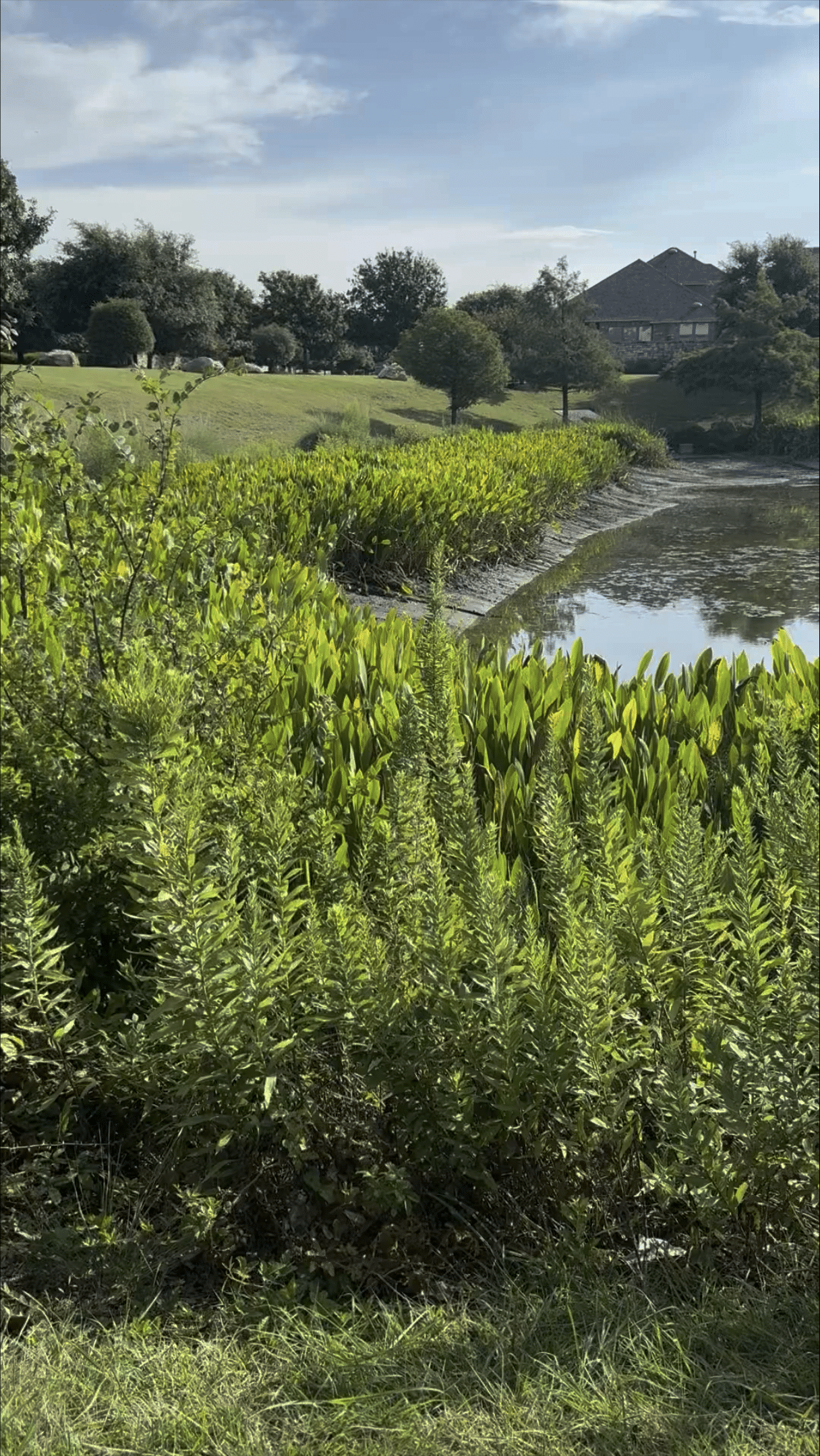
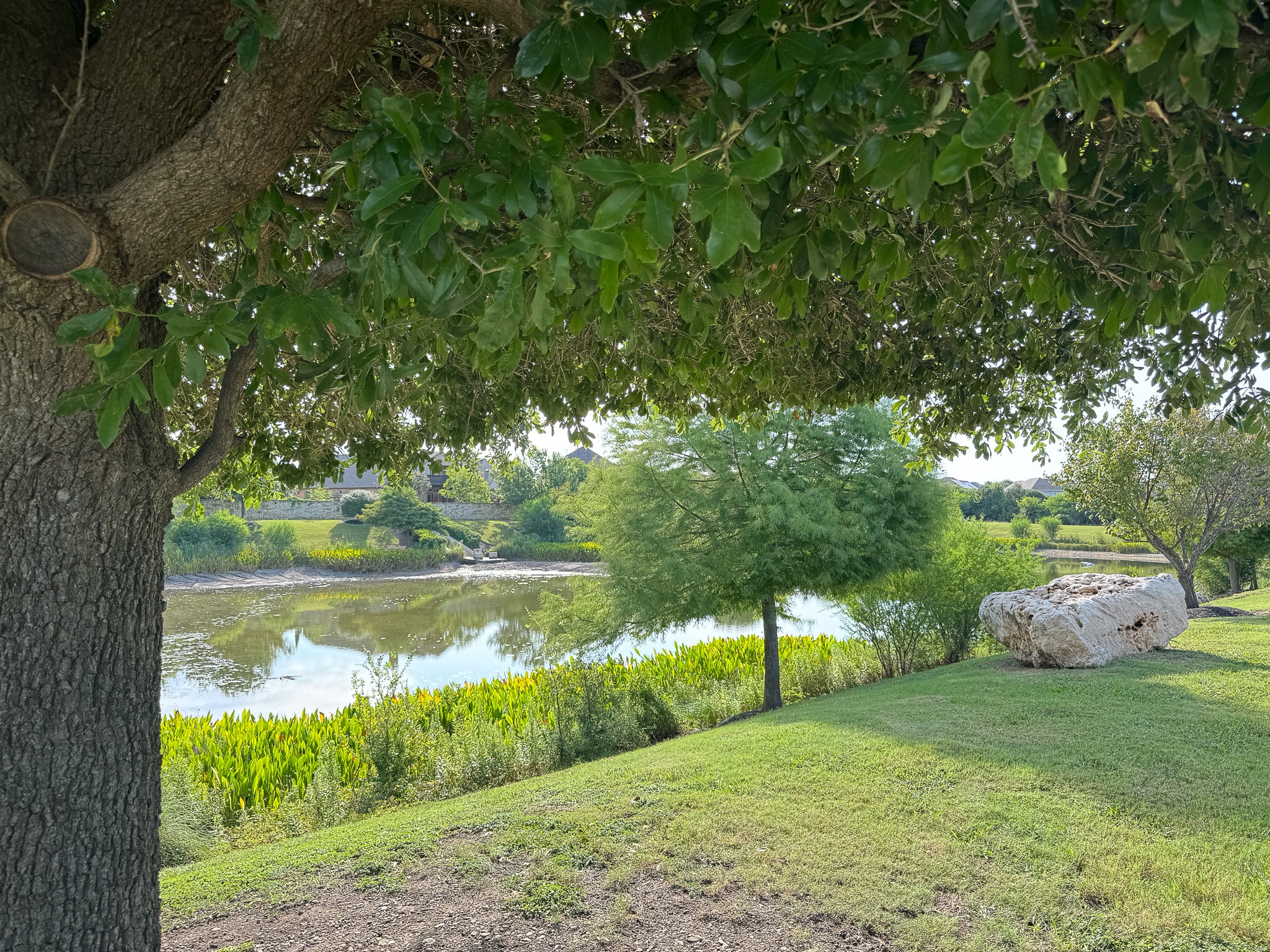
After restoration, the Mayfield Ranch water quality pond was stabilized and returned to proper operating condition. Sediment was removed, flow paths were restored, and shoreline areas were reinforced with established vegetation to reduce erosion and improve pollutant filtration. The rehabilitated pond now manages stormwater more efficiently, supports long-term water quality performance, and provides a stable, compliant system designed for reduced maintenance and improved watershed health.
BANNOCKBURN CHURCH
Revegetation and Erosion Control
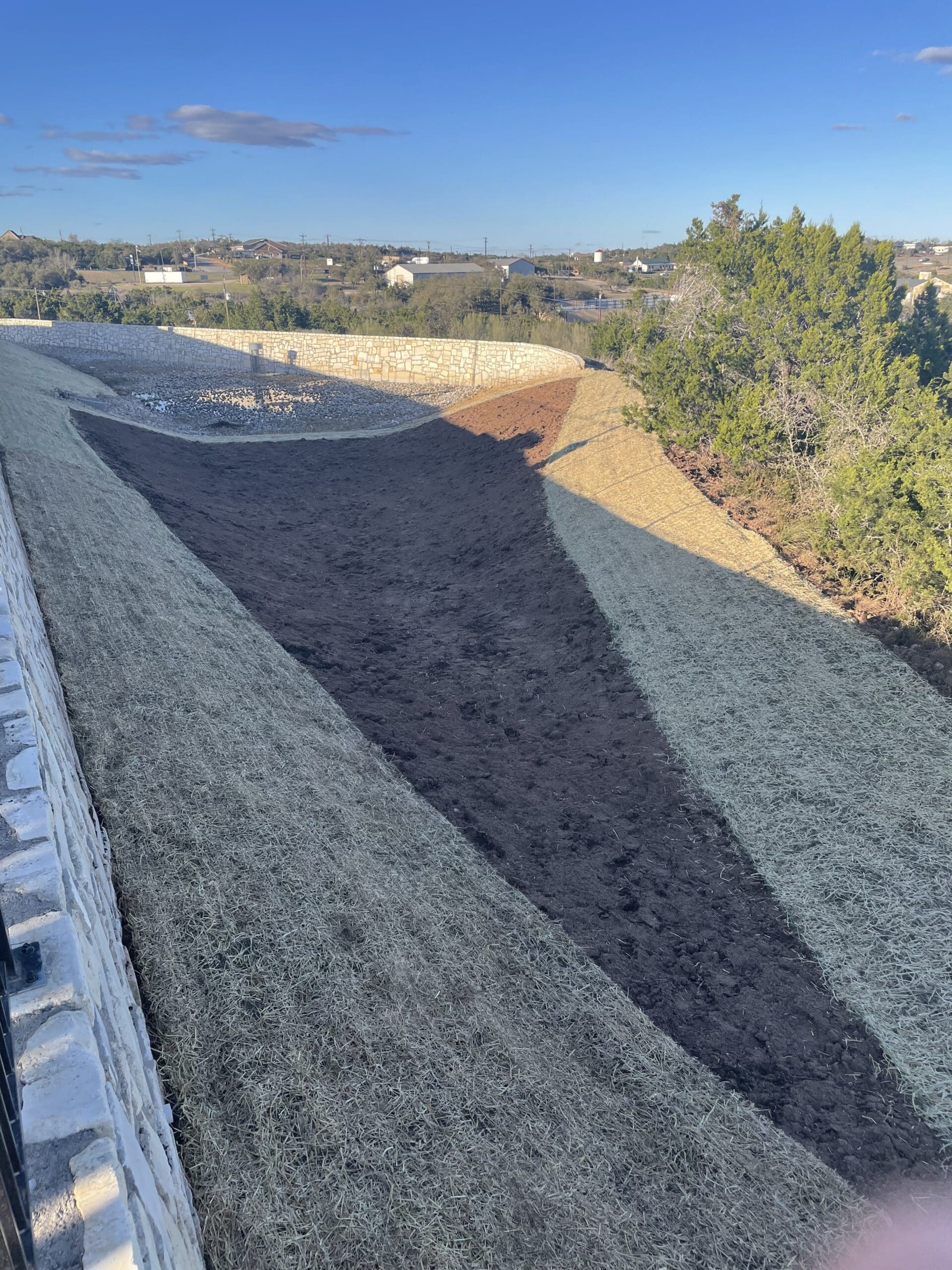
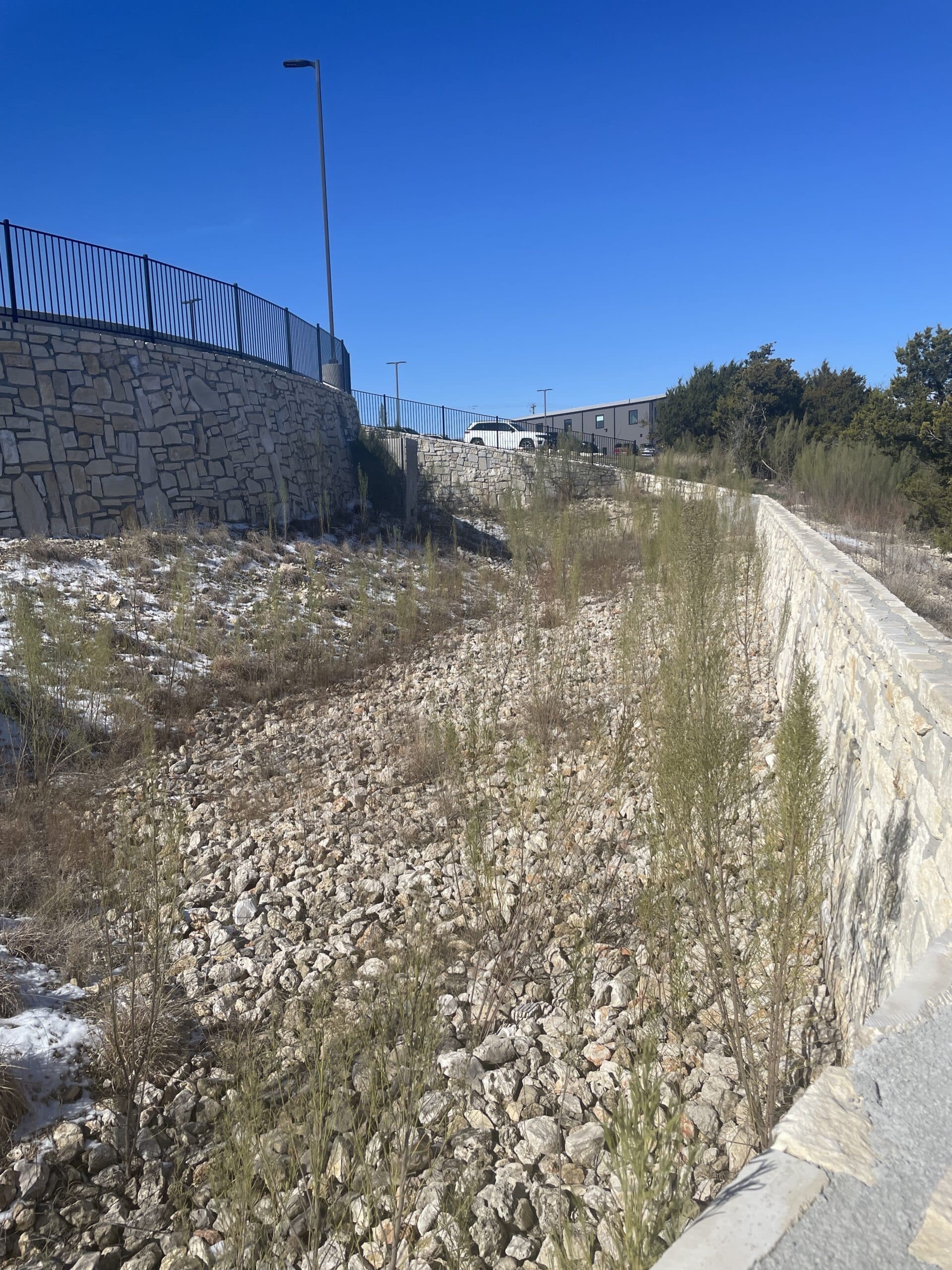
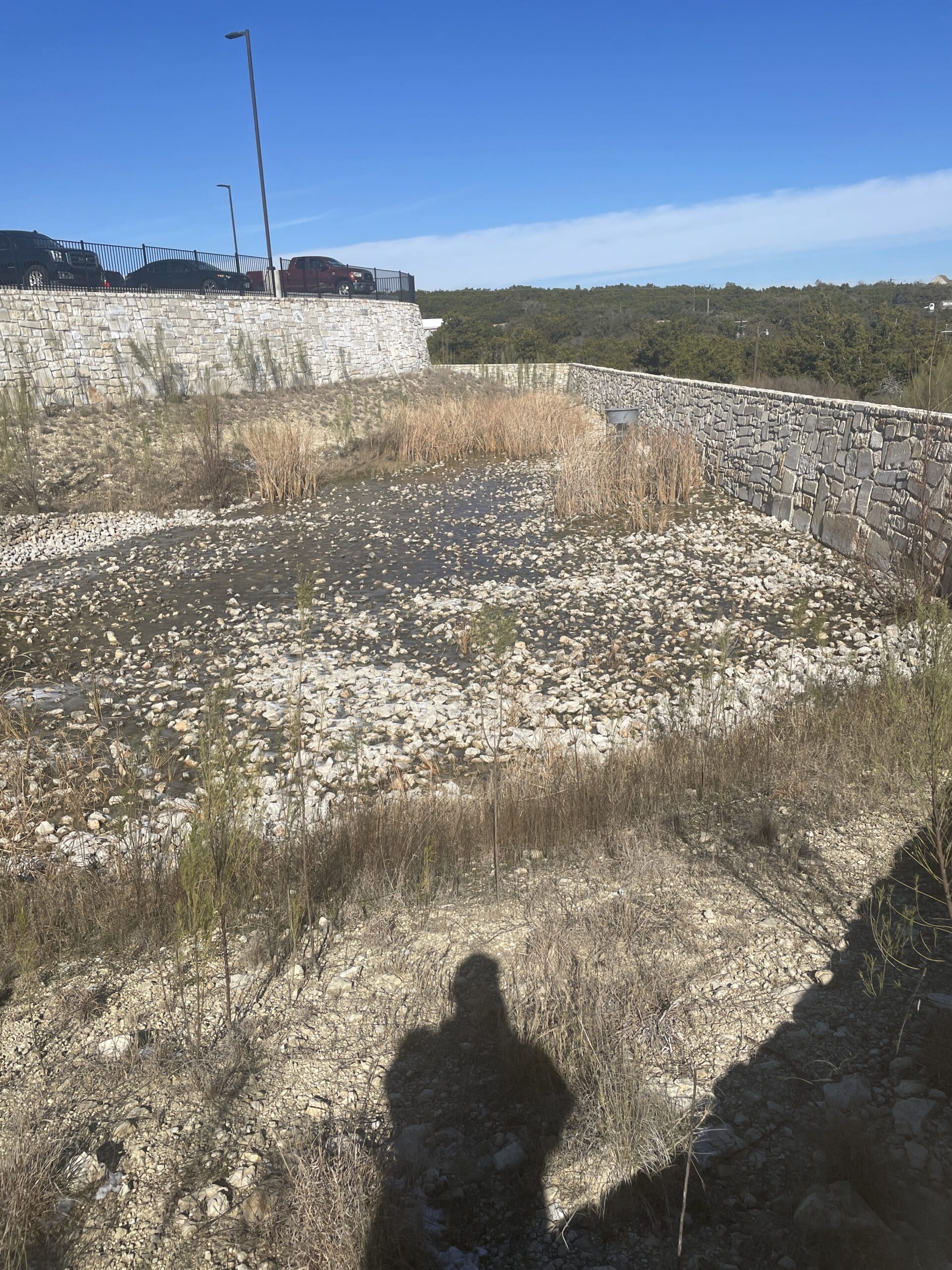
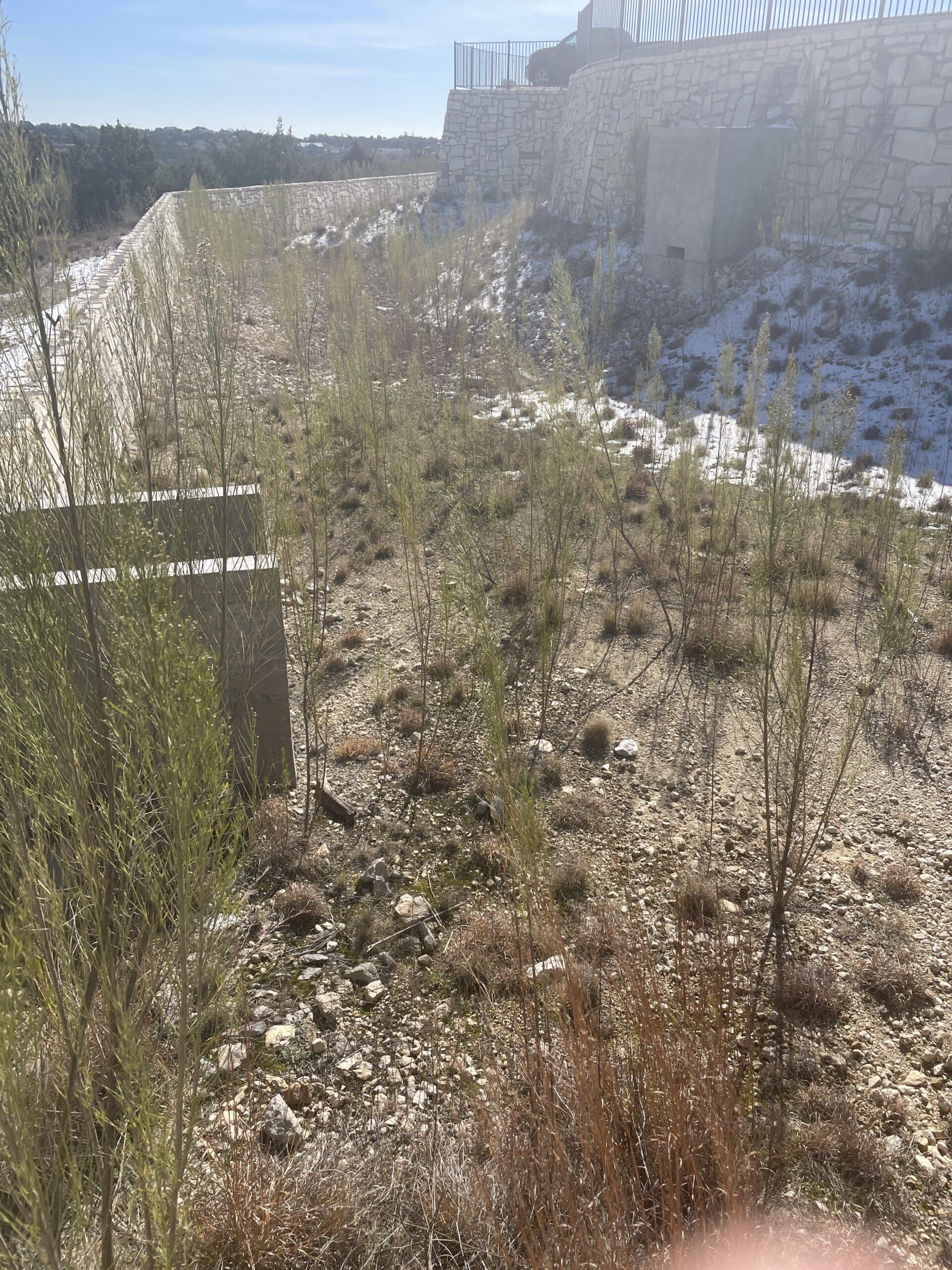
Before revegetation, these drainage and slope areas at Bannockburn Church showed exposed soils, limited vegetation coverage, and early signs of erosion. Sparse ground cover and unstable slopes increased the risk of sediment migration during rainfall events and reduced the site’s ability to manage stormwater effectively. These conditions made long-term maintenance more challenging and left the drainage system vulnerable to continued erosion, reduced slope stability, and diminished stormwater performance.
Restored Vegetation Supporting Slope Stability and Drainage Performance
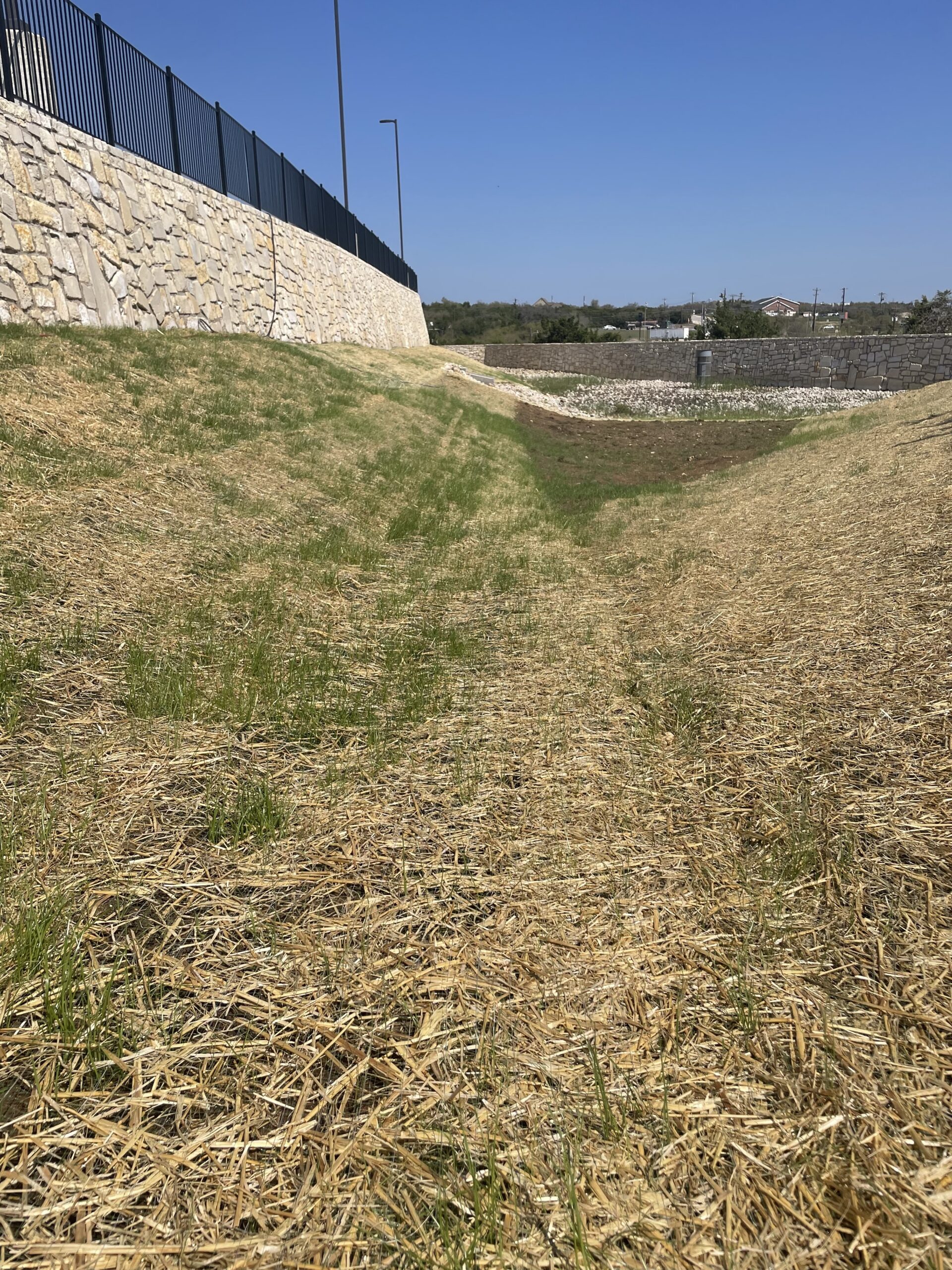
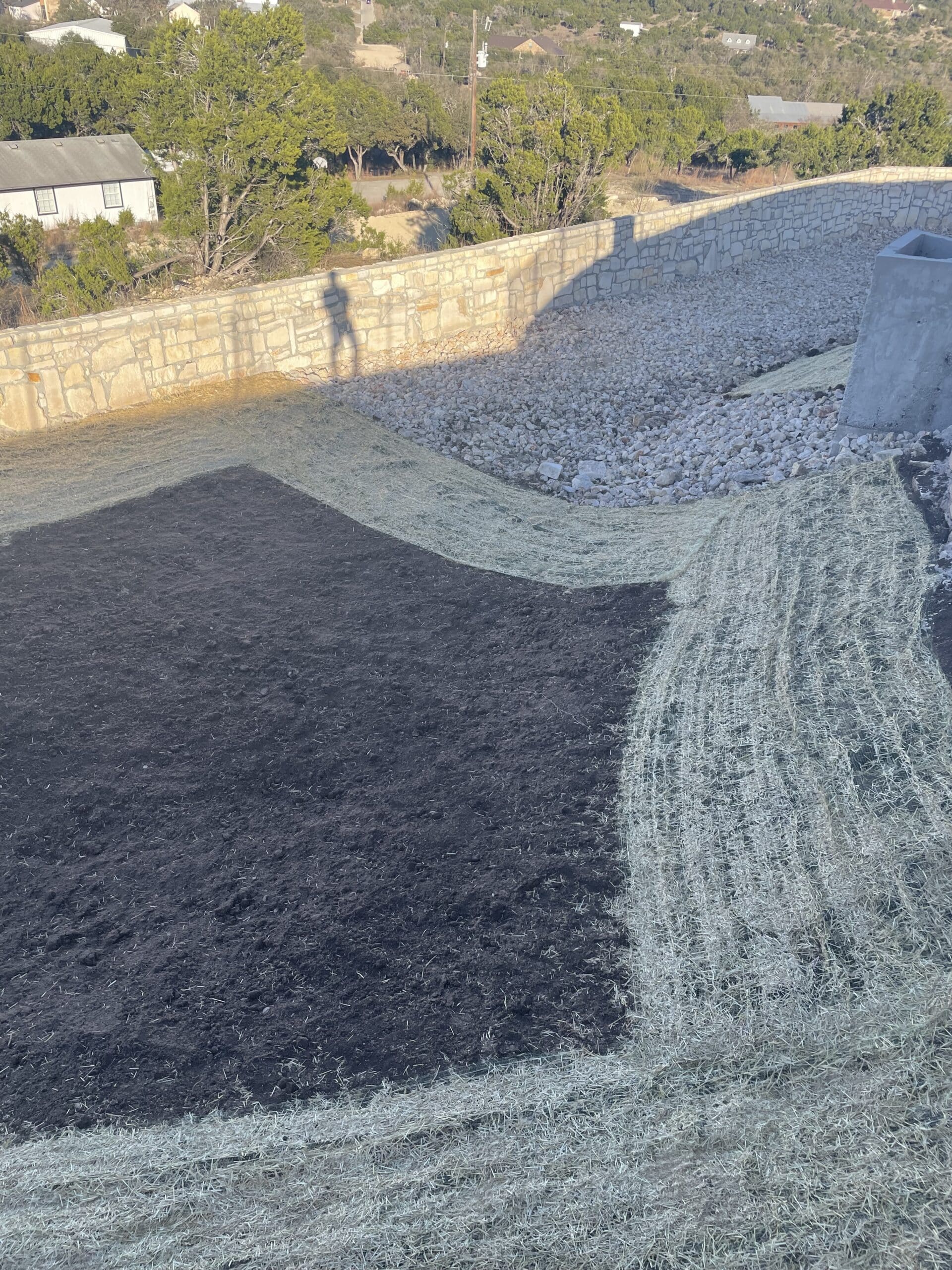
After restoration, the Bannockburn Church site was stabilized through targeted revegetation and erosion control measures. Slopes and drainage features were regraded where needed, protected with erosion control materials, and replanted to establish healthy vegetative coverage. The restored vegetation now stabilizes soils, reduces erosion, and improves stormwater flow management across the site. These improvements support long-term durability, reduced maintenance needs, and improved drainage performance.